Children visiting a friend’s pool need clear permission, a focused adult watcher, and secure barriers before swimming starts. Good pool safety rules help both families understand who’s responsible and what children can safely do.
A friendly invitation doesn’t explain a child’s swimming ability or the host’s supervision plan. Those details deserve a quick conversation before drop-off.
Layers of protection bring greater peace of mind, especially when children move between the house, yard, and pool. The first step is making the visit’s swimming arrangements clear.
Key Takeaways
Every swim visit needs a named adult watcher, clear rules for children, and barriers that prevent unsupervised access. Swimming lessons, buddies, and flotation devices never replace adult supervision.
Parents should agree on swimming plans before the visit. Hosts should prepare the pool area, emergency equipment, and closing routine before guests arrive.
Before the Visit, Have One Clear Conversation
Parents should explain their child’s swimming ability
“Can swim” can mean different things to different families. Parents should describe what their child can do without help.
That includes entering safely, returning to the surface, floating, and reaching an exit. Children may manage a lesson comfortably but struggle during noisy group play.
Parents should also share medical needs, relevant medications, and emergency contact information. The host needs to know about seizures, breathing conditions, or other concerns that affect water safety.
If swimming wasn’t part of the original invitation, both families should agree before anyone enters the pool.
Hosts should explain the supervision plan
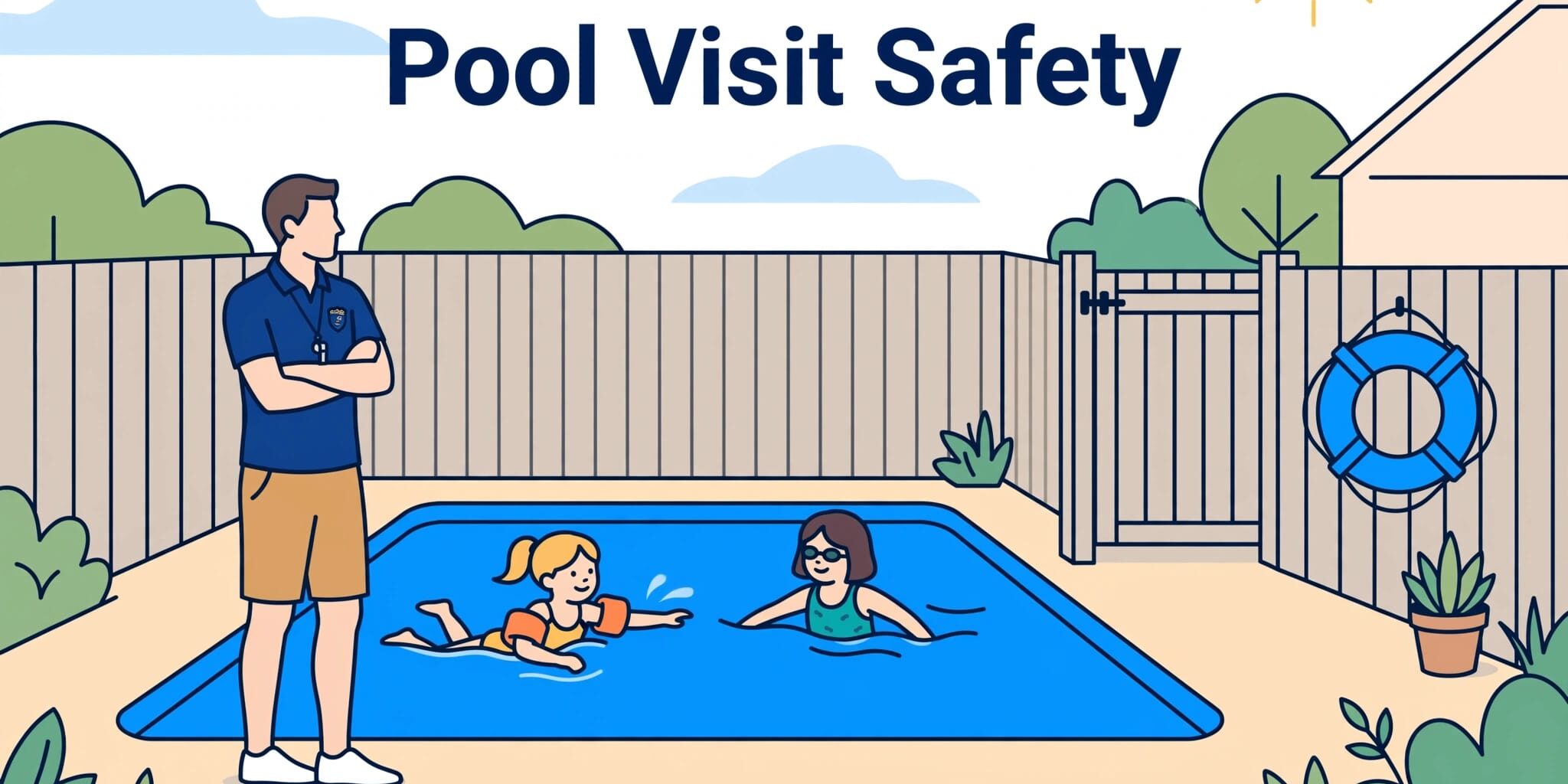
The host should identify the supervising adult and explain whether younger siblings will share the pool. Even if a lifeguard is on duty, the host should name the adult responsible for watching the visiting child.
Adults should also discuss bathroom trips, food preparation, and other interruptions. A watcher can’t supervise swimmers while helping another child inside.
Swimming needs to pause unless another adult clearly accepts responsibility. Parents can decline swimming without declining the friendship. A dry playdate remains a good choice when supervision or barriers fall short.
Hosts should welcome these questions. Clear answers help visiting parents feel comfortable and help children understand the same expectations.
12 Pool Safety Rules for Visiting Children
Adults manage supervision and preparation
- Assign one adult water watcher who avoids phones and alcohol. Changes require a clear, spoken handoff.
- Never leave a child unattended near water. Drowning can happen quickly, without shouting or obvious splashing.
- Keep young children and weak swimmers within arm’s reach. Close supervision lets an adult respond immediately.
- Keep CPR certification current for child and adult emergencies. First-aid training, rescue equipment, and an accessible phone support emergency care.
Children follow simple swimming rules
- Ask the supervising adult before entering, then swim with a buddy. Even strong swimmers shouldn’t swim alone.
- Walk on the pool deck, with no running, and keep hands to themselves. Wet surfaces are slippery, and pushing can cause injuries.
- Enter feet first in unfamiliar pools. Headfirst entry belongs only in an approved, designated diving area.
- Stay away from drains and suction outlets. Suction can trap hair, clothing, or body parts.
Hosts control access and closing time
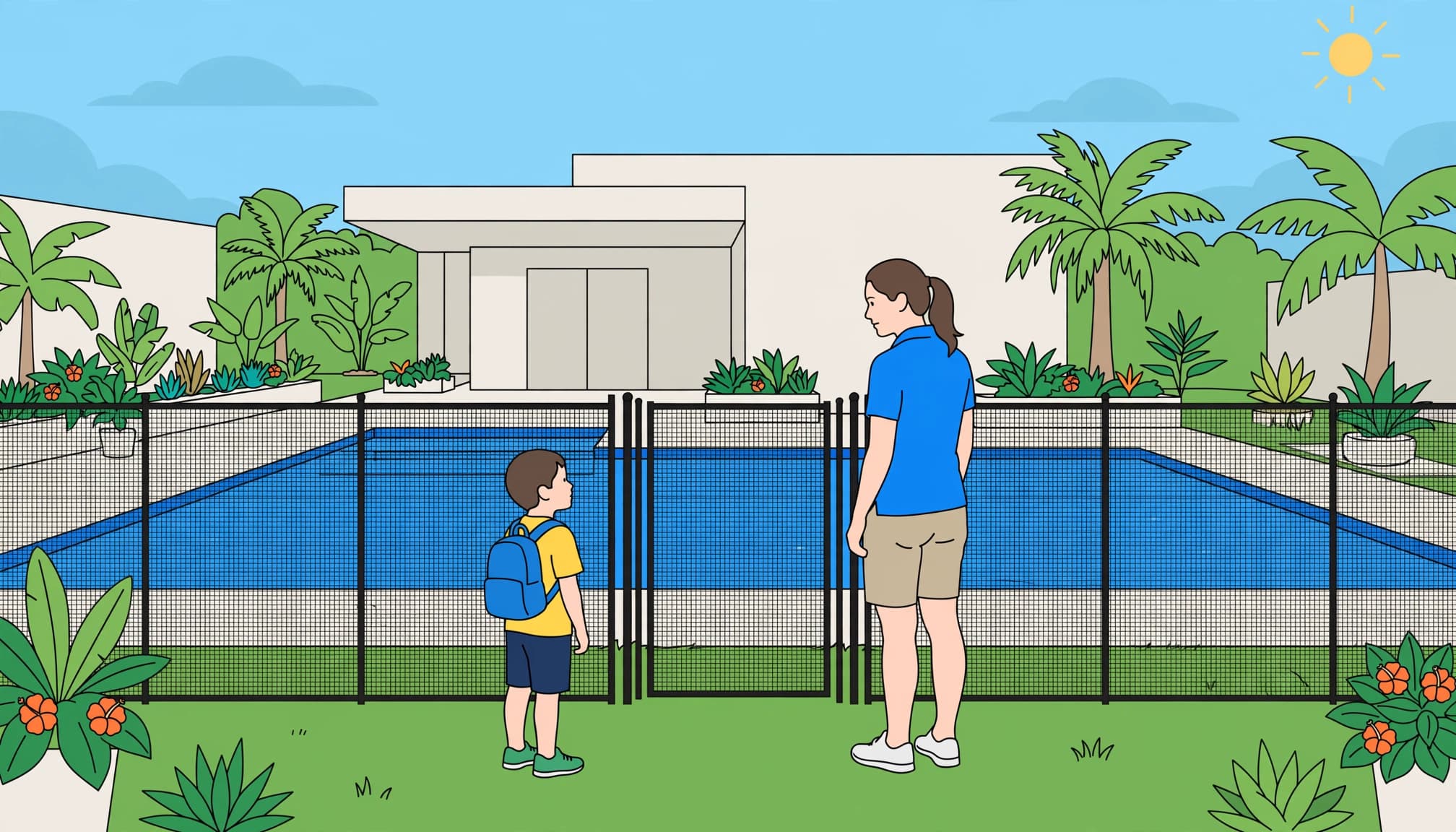
- Keep a four-sided barrier around the pool. It separates swimming water from everyday play spaces.
- Keep gates closed and latched, with alarms working. An open access point weakens the entire safety setup.
- End swimming when thunder sounds or lightning appears. Everyone should reach shelter before the storm moves overhead.
- Remove toys and floats after swimming. Attractive playthings can draw children back toward the water.
These rules work best when adults explain them before excitement takes over. Children should know which adult grants swimming permission.
Make the Pool Barrier a Reliable Safety Layer
Separate the pool from the house and yard
A property-line fence may leave direct access between the home and water. A four-sided fence creates a separate pool area.
The Red Cross’s home pool guidance reports an 83% lower child drowning risk with four-sided isolation fencing versus three-sided property-line fencing.
Residential barrier guidance calls for at least 48 inches above grade, measured outside the pool area. Openings shouldn’t allow a 4-inch-diameter sphere through.
That measurement isn’t permission for large gaps beneath mesh fencing. Different designs can require smaller openings.
Furniture, coolers, and planters should stay away from the barrier. Otherwise, children may use them as climbing steps.
Pay attention to gates and door alarms
A self-closing and self-latching gate should open outward, away from the pool, and latch without help. Adults should never prop it open.
InterNACHI’s residential pool guidelines explain latch protection when releases sit below 54 inches. Those releases belong poolside, at least 3 inches below the gate top, with surrounding openings restricted.
The same guidance specifies a door alarm reaching at least 85 decibels at 10 feet. It should activate within seven seconds, with temporary silencing limited to 15 seconds.
These are safety benchmarks, not a complete local installation specification. A gate that sticks or misses its latch needs repair before children use the area.
Adjust Protection for the Child and Pool
Younger children need hands-on supervision
Toddlers and beginning swimmers need an adult close enough to reach them immediately. The watcher should enter the water when necessary.
Swimming lessons add useful skills, but they don’t make a child drown-proof. Lessons never replace supervision or a secure barrier.
A properly fitted, U.S. Coast Guard-approved life jacket can add protection for weak swimmers. Inflatable arm bands and pool floats aren’t substitutes.
Older children still need clear limits. Long underwater challenges and breath-holding contests can cause loss of consciousness, even among confident swimmers.
A buddy can notice trouble, but another child can’t take over the water watcher’s job.
Small and above-ground pools need protection too
A shallow inflatable pool still creates a drowning hazard. Adults should empty it after use and store it away.
Above-ground pools need controlled access to ladders and steps. Adults should secure or remove access equipment according to its design after swimming.
Pools and spas, including hot tubs, need secure drain covers that meet current safety standards. Missing, loose, or broken covers mean swimming stops.
The CPSC’s pool safety guidance addresses drain entrapment and compliant covers under the Virginia Graeme Baker Pool and Spa Safety Act.
Children shouldn’t investigate a drain or try to retrieve something caught near it. That job belongs to an adult.
A fitted safety cover should be secured as soon as swimming ends, but it doesn’t replace a barrier or an adult watching the pool.
Close the Pool Before the Playdate Moves Inside
The end of swimming deserves the same attention as the beginning. Children often remain excited, even after adults announce snack time.
One adult should account for every child outside the pool area. Then adults should remove toys, secure access equipment, latch the gate, and reset alarms.
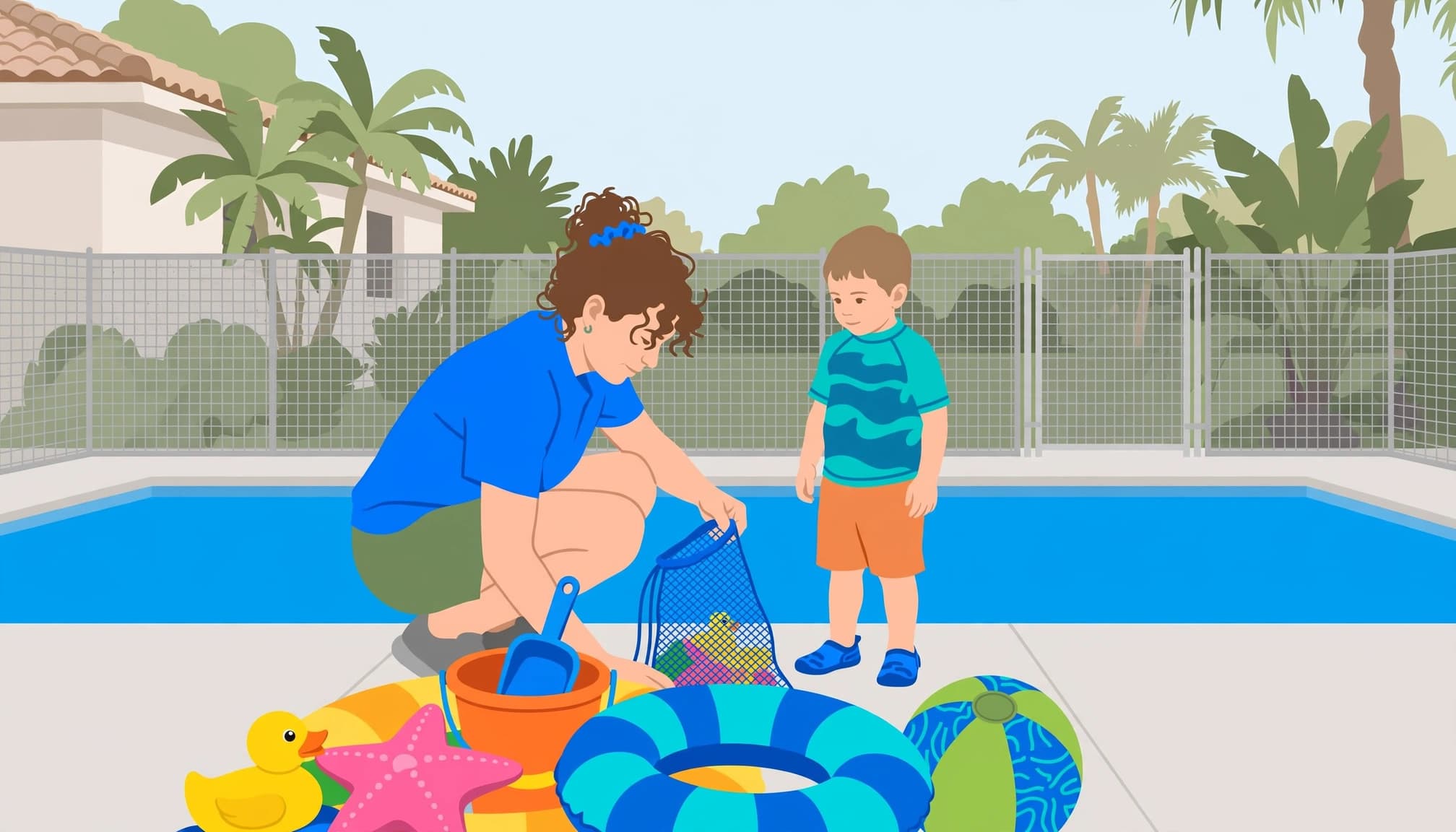
Dry clothes don’t end the need for protection. Children can wander back toward the water while adults clean up or greet arriving parents.
Pool chemicals also need locked storage, away from children and food. Children shouldn’t handle chemical containers or enter storage areas.
A CDC report on pool chemical injuries estimated roughly 4,500 annual U.S. ER visits during 2015 through 2017. Children and teens accounted for more than one-third.
Chemical storage belongs in the host’s safety routine, even during visits without swimming. An unlocked shed or equipment area can attract curious children.
Have an Emergency Plan Everyone Understands
Prepare equipment and practice before guests arrive
Hosts should keep a charged phone, reaching pole, rescue ring, and first-aid supplies accessible. Rescue equipment shouldn’t sit behind clutter or locked storage.
The supervising adult should know the home’s exact address and how responders can reach the pool. A visiting caregiver may not know either detail.
Regular caregivers should complete CPR and first-aid training. They should renew certification before it expires and refresh skills between classes.
Drowning CPR includes rescue breaths and chest compressions. Training gives adults a chance to practice rather than guess during a crisis.
Compressions run at 100 to 120 per minute. However, reading instructions doesn’t replace hands-on practice.
Respond immediately when a child needs help
If a child goes missing, adults should search the pool first. Searching bedrooms first can waste precious time.
A rescuer should use reaching or throwing equipment when possible. Untrained adults shouldn’t enter water when doing so creates another victim.
After safe removal, an unresponsive child who isn’t breathing normally needs immediate urgent help and CPR. Someone should call 911 while another adult starts care.
A lone rescuer with a phone should use speaker mode and follow dispatcher instructions. Adults should use an AED when available.
Persistent coughing, breathing trouble, confusion, or unusual sleepiness after submersion require urgent medical attention. Adults shouldn’t leave the child alone.
Frequently Asked Questions
Can a strong swimmer visit a friend’s pool without adult supervision?
No. Swimming ability doesn’t prevent every slip, injury, or medical emergency. A focused adult still needs to supervise.
Why assign one watcher when several adults are nearby?
Groups can leave responsibility unclear. Naming one watcher prevents everyone from assuming someone else has the job. The next watcher must clearly accept responsibility.
What if the pool gate won’t latch?
Swimming should stop, and adults should keep children away until repairs restore secure access. A chair or verbal reminder can’t replace a working gate.
Can children return to the pool after snack time?
Only after the supervising adult grants fresh permission and resumes the water watch. Earlier permission doesn’t cover the whole visit.
Do alarms replace a pool fence?
Alarms provide warnings, while a barrier limits access. Families gain better protection when these measures work together with supervision.
A Safer Visit Starts With Shared Expectations
Good pool safety rules help families enjoy visits with fewer unanswered questions. Clear responsibility matters before swimming, during play, and after everyone leaves the water.
A focused watcher and dependable barriers support each other. Children benefit when both households follow the same simple plan.
Questions or ready to get started? Call us at (941) 500-9484