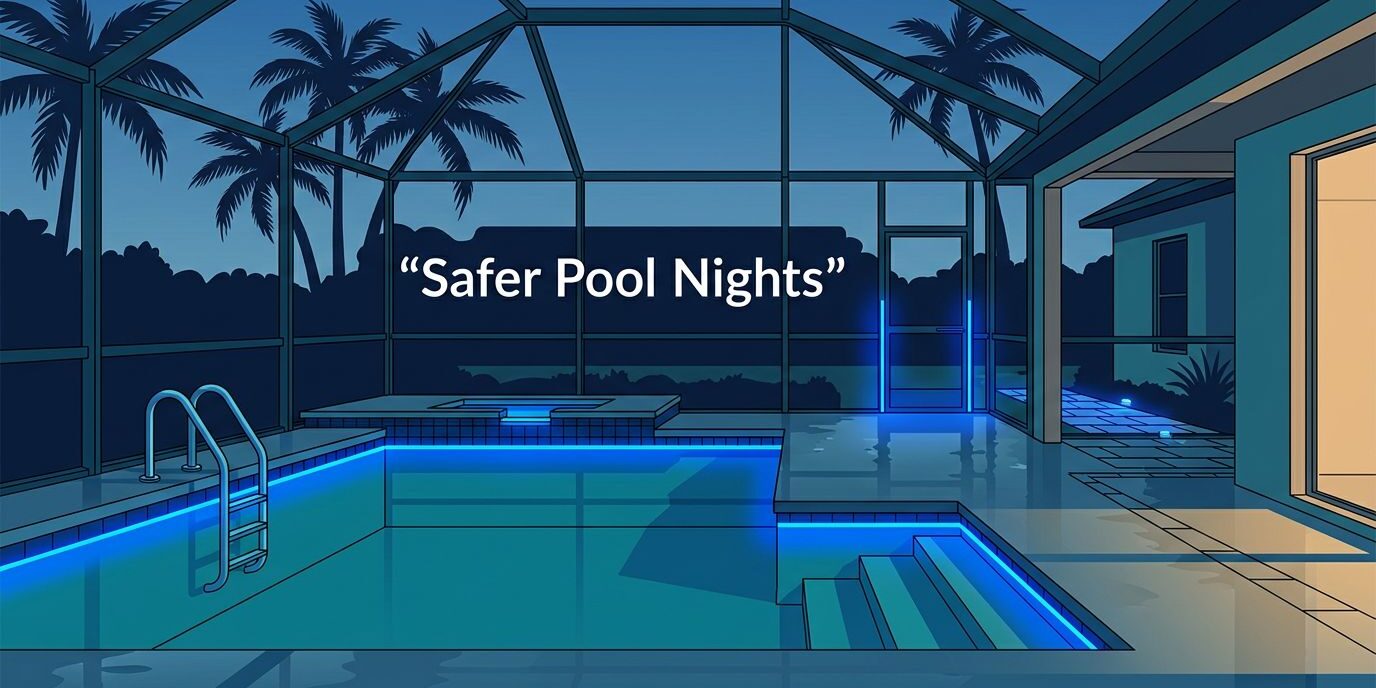
A dark pool deck can hide a wet step, loose toy, or child near the water. Good pool safety lighting helps homeowners see the entire area after sunset.
Southwest Florida homes often have screened lanais, palm-filled yards, and pools used well into warm evenings. These spaces look beautiful, but shadows gather around ladders, steps, drains, and furniture.
Better visibility starts with the right light fixtures and a safe electrical design. Lighting also works alongside a pool fence, door alarm, and attentive adult supervision. The first step is identifying where illumination needs to work.
Key Takeaways
- Pool safety lighting should illuminate the waterline, steps, ladders, gates, deck, and routes between the home and pool without creating glare.
- Low-voltage LED fixtures offer efficient, flexible illumination, but every fixture, transformer, niche, seal, and wiring connection must be compatible and properly listed.
- GFCI protection, grounding, bonding, waterproof sealing, and correct junction box placement are essential parts of a safe pool lighting installation.
- Existing inground pools may be retrofitted without draining when the niche, conduit, and bonding are in sound condition; damaged or uncertain systems require more extensive work.
- Above-ground pools need fixtures designed for their exact model and installation method, while regular inspections help identify flicker, corrosion, water intrusion, and repeated GFCI trips.
How pool safety lighting helps after dark
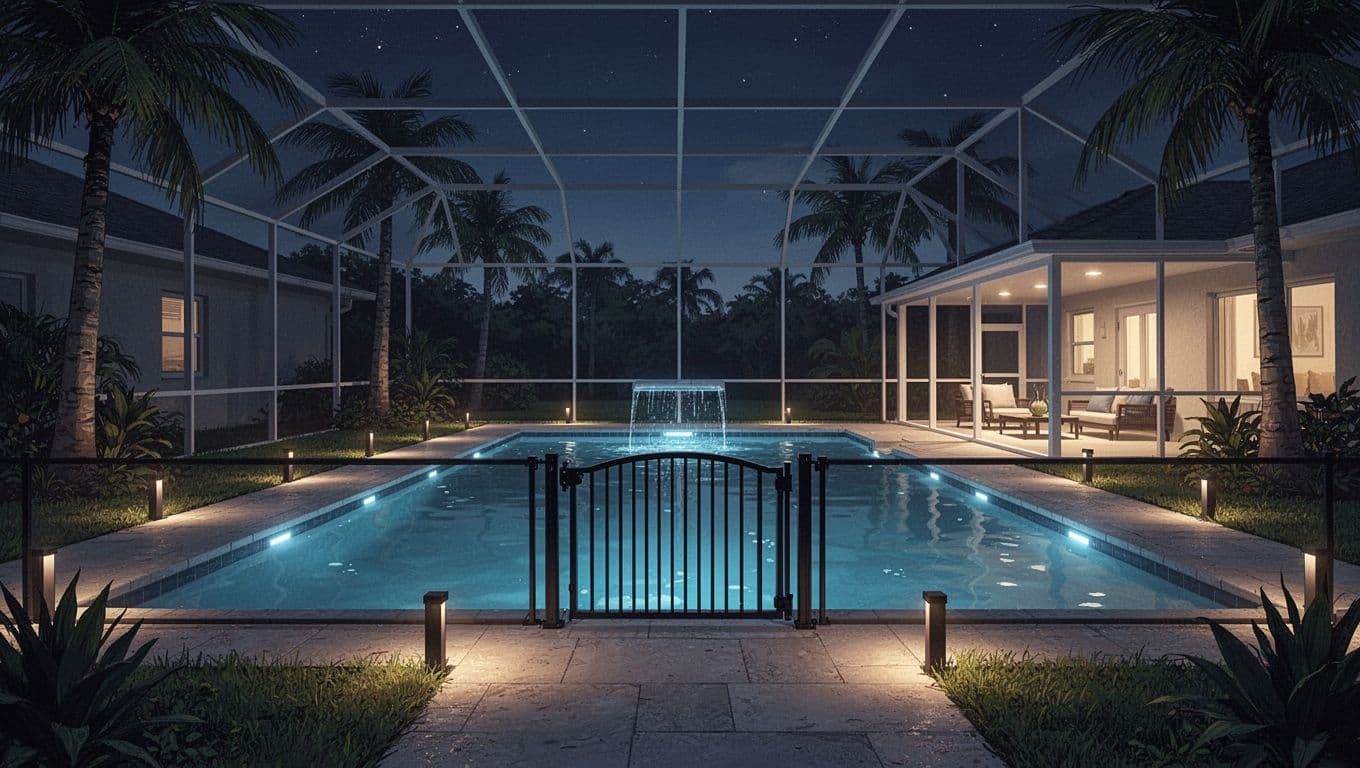
After-dark safety begins with visibility. A homeowner should see the waterline, entry steps, deck surface, and route between the house and pool.
Underwater illumination helps people see the pool itself, but it doesn’t automatically light the surrounding deck. Landscape lighting, including path, wall, and enclosure fixtures, completes the picture by illuminating gates, steps, and routes without producing glare.
See edges, steps, and the waterline
A strong setup removes dark pockets without shining harshly into swimmers’ eyes. Lights should reveal the first step, ladder rails, coping, and wet walking surfaces.
Pool lights work best when they spread light across the water. Separate deck fixtures should cover gates, stairs, outdoor showers, and equipment paths.
A homeowner can test the view at night. Standing at the back door often reveals shadows that look invisible during daylight planning.
Keep the lanai comfortable
Screened enclosures can create dark corners, especially around furniture and doors. Soft, downward-facing fixtures help people move safely without turning the whole yard bright.
Good pool enclosure lighting also helps a caregiver notice movement near the water. It should support supervision, not invite people to stare into glare.
A bright pool can still leave the safest walking route in shadow.
Choosing the Right Pool Lighting for Southwest Florida
The right swimming pool lights depend on the pool type, existing wiring, and homeowner’s nighttime routine. The best pool lighting technology balances visibility, installation needs, and control.
Why low-voltage LED systems are popular
LED pool lighting commonly uses 12-volt power through a transformer. These low-voltage systems use less energy than older incandescent and halogen bulbs. They also produce less heat and support strong energy efficiency over a long service life.
LEDs can provide white light or color-changing pool lights. Smart lighting and a remote control can make evening gatherings more enjoyable. Decorative color control should never replace clear visibility.
The fixture still needs the correct light niche, seal, driver, and listing. A bright bulb cannot fix a poor beam angle or a dark deck. For submerged fixtures, homeowners should review the IP68 pool-lighting guidance and the manufacturer’s instructions.
How older and decorative options compare
Halogen pool lights and incandescent bulbs can look warm and familiar. However, they draw more power, create more heat, and often need more frequent replacement.
Fiber optic systems keep the lamp source away from the water. They can suit older designs, but repairs and parts may be harder to find.
Solar path lights work well along a walkway. They usually don’t provide enough dependable light for an underwater pool fixture. Floating and string lights belong only where the product listing allows pool use.
A quick comparison helps homeowners choose the right role for each option.
| Lighting option | Best fit | Main concern |
|---|---|---|
| Low-voltage LED | Underwater and deck lighting | Verify the listing, transformer, and niche |
| Halogen or incandescent | Compatible older systems | Higher energy use, heat, and maintenance |
| Fiber optic | Accent lighting or existing systems | Replacement parts may be limited |
| Solar path lights | Walkways and landscaping | Output changes with weather and shade |
| Floating or string lights | Decorative areas | Pool use requires a proper product listing |
For most Southwest Florida homes, low-voltage LED fixtures provide the best mix of efficiency, visibility, and flexible control.
The electrical safety features pool lights need
Pool water and electricity require careful planning. Replacing a bulb isn’t a complete pool light installation.
GFCI protection and low-voltage power
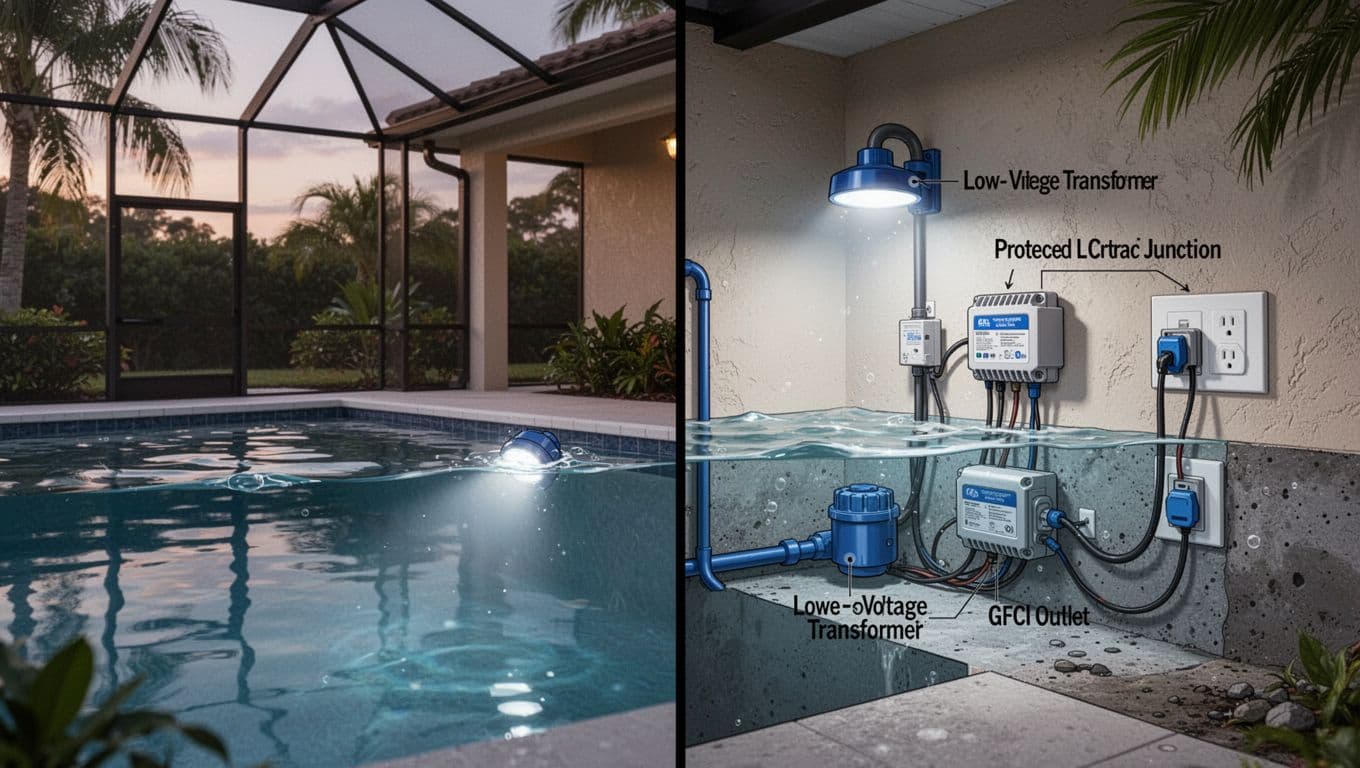
A GFCI device detects current taking an unsafe path and cuts power. This response can reduce shock risk near wet surfaces.
Florida pool lighting safety standards summarize GFCI requirements for underwater luminaires. A 120-volt underwater fixture requires GFCI protection. Its circuit also needs proper grounding and bonding.
An approved 12-volt AC fixture supplied through a verified transformer can qualify for a secondary-side exception. The 120-volt primary side still follows GFCI, grounding, and bonding rules.
Homeowners shouldn’t assume a “low-voltage” label makes an installation safe. The electrician must keep the transformer, fixture, light niche, conduit, bonding, and wiring compatible.
Niches, seals, and junction boxes
NEC 680.23 is part of the applicable electrical code for underwater luminaires in permanent pools. Listed wet-niche, dry-niche, and no-niche fixtures each have installation requirements. The junction box must remain accessible and be located as required for the pool system.
Waterproof sealing matters. A damaged gasket can let water reach components and cause repeated trips or fixture failure. The fixture’s listing and instructions control the correct replacement.
Florida regulation summaries describe junction box placement at least eight inches above the water surface and four feet from the pool edge. Local permitting officials can apply current code and local amendments.
A certified electrician should inspect bonding and grounding before energizing an older system. Pool light repair is not a safe do-it-yourself project.
Retrofitting an existing inground pool
Retrofit questions usually start with one concern: can new underwater pool lights be installed in an existing pool without draining it? Sometimes, yes. The fixture design and condition of the old installation determine the answer.
When water can remain
Many wet-niche fixtures can be removed from their niches after power is disconnected. A qualified technician can replace a compatible light and gasket from the pool deck.
Water may remain when the light niche, conduit, and bonding are in sound condition. The technician must still follow the fixture instructions and verify every connection.
A dry-niche system, damaged conduit, cracked niche, or uncertain bonding can change the job. Water may need to be lowered, and some repairs may require draining.
No homeowner should loosen an underwater fixture while power remains connected. A tripped breaker isn’t enough unless the circuit is tested and locked out.
Why new construction and retrofits price differently
New construction lets the builder place niches, conduit, a junction box, transformers, and bonding before finishes cover them. Access is easier, and the lighting plan can include the full deck.
Retrofit work may involve an outdated niche, buried conduit, a failed transformer, or inadequate GFCI safeguards. Labor rises when the technician must diagnose hidden problems.
A useful quote should list the fixture, transformer, niche work, conduit, bonding, GFCI safeguards, permit, labor, and final testing. Comparing only the bulb price can hide the real cost.
Homeowners should ask whether the quote covers water lowering, disposal, warranty terms, and future service. The cheapest fixture isn’t always the least expensive choice over time.
Safer lighting for an above-ground pool and lanai
An above-ground pool needs a different plan. Its walls, liners, rails, and equipment layouts don’t match built-in niches.
Choose fixtures made for the pool
An above-ground pool should use only light fixtures listed for its model and installation method. A homeowner shouldn’t add a niche light to a soft-sided or metal-wall setup.
Exterior low-voltage path lights can brighten the entry, steps, and nearby deck. A listed pool light can illuminate the water when its instructions allow that use.
Extension cords near the water create avoidable risk. Outdoor receptacles need GFCI protection, weather covers, and the spacing required by current electrical code.
Solar-powered pool lights can help along a walkway, but cloudy weather and blocked panels reduce output. Floating pool lights and string lights are decorative products unless clearly listed for pool use. They can’t replace listed equipment or supervision.
Balance visibility with comfort
Lanai lighting should point downward or toward walking surfaces. Direct glare can make it harder to see a child in the water.
Smart lighting and color-changing pool lights work well for parties and quiet evenings. A soft white setting usually gives the clearest view of steps and swimmers.
Southwest Florida weather also deserves attention. Salt air, humidity, storms, and irrigation spray can shorten the life of exposed landscape lighting and connectors.
A homeowner should choose sealed outdoor light fixtures and keep landscape sprinklers away from electrical equipment. After a major storm, the area deserves a quick visual check before nighttime swimming.
A simple pool lighting inspection routine
Good fixtures still need attention. A short routine catches flicker, water intrusion, loose covers, and failing controls early.
Test the safety devices
A practical schedule can stay simple:
- Test each GFCI monthly, following the device’s test and reset instructions.
- Look at lenses, faceplates, seals, junction areas, and exposed wiring, including string lights, each month.
- Check smart lighting schedules, controls, and remote control reset behavior.
- Schedule a licensed electrician after lightning, flooding, remodeling, or repeated trips.
- Have older pool lighting inspected before extensive nighttime swimming.
If a GFCI trips once, the cause may be moisture or a failing component. Repeated trips need professional diagnosis, not repeated resets.
The Florida GFCI requirements for pool lighting can help homeowners understand which circuits require protection. Local officials and licensed electricians provide the final answer for a specific property.
Know the warning signs
Flickering, cloudy lenses, corrosion, warm covers, buzzing, or water inside a fixture need attention. Exposed wiring and repeated trips need attention too.
The pool should remain closed during pool light repair when the fixture or circuit is involved. A certified electrician can test voltage, insulation, bonding, GFCI operation, and transformer output.
Lighting also has limits. A fence, self-closing gate, door alarm, and direct supervision still matter. No light can stop a child or pet from reaching the water.
Frequently Asked Questions
Does pool safety lighting replace a pool fence or supervision?
No. Lighting improves visibility, but it cannot prevent a child or pet from reaching the water. A pool fence, self-closing gate, door alarm, and attentive adult supervision remain important safety measures.
Are low-voltage LED pool lights safer?
Low-voltage LED systems can reduce energy use and support safer pool lighting when installed with the correct transformer and listed fixtures. They still require compatible niches, seals, wiring, grounding, bonding, and applicable GFCI protection.
Can an existing pool light be replaced without draining the pool?
Sometimes. A qualified technician may replace a compatible wet-niche fixture while water remains in the pool if the niche, conduit, bonding, and wiring are in sound condition. Damaged or uncertain installations may require lowering the water or draining the pool.
Can solar or string lights be used around an above-ground pool?
Solar path lights can help illuminate walkways, but their output changes with weather and shade. Floating and string lights should be used near or in a pool only when the product is clearly listed for that application, and they cannot replace listed equipment or supervision.
How often should pool lighting safety devices be checked?
Homeowners should test each GFCI monthly according to the device instructions and inspect lenses, seals, junction areas, controls, and exposed wiring. Repeated trips, flickering, corrosion, buzzing, warm covers, or water inside a fixture require professional diagnosis.
Conclusion
A well-planned pool lighting setup makes steps, edges, gates, and water easier to see after sunset. Low-voltage LED systems offer efficient, flexible illumination, but safe installation depends on listing, sealing, GFCI protection, grounding, and bonding.
Retrofitting an existing pool can work without draining, but only when the niche and wiring support the replacement. An above-ground pool needs fixtures designed for its exact setup. Regular testing keeps small lighting problems from becoming serious electrical concerns.
Lighting is one layer of a safer backyard oasis. Homeowners who want another physical barrier can request a pool safety fence estimate or Get a FREE Quote. Better visibility and a reliable barrier give families more peace of mind after dark.