Florida pools are beautiful, inviting, and dangerous when a child can reach them alone. That is why autism pool safety needs more than reminders to stay nearby.
Children with autism may wander, move toward water, or miss danger cues before anyone notices. Florida homes need a layered plan covering barriers, secure access points, active supervision, visual teaching, and swim practice. It should protect your backyard and prepare your family for canals, ponds, lakes, docks, and beaches. Start with the risks your home must address every day.
Key Takeaways
- Autism pool safety requires layered protection, including a four-foot barrier, self-latching gate, alarms, active supervision, and emergency preparedness.
- Prevent wandering by securing doors, gates, sheds, garages, docks, and other routes that could lead a child to water.
- Use visual supports, social stories, communication tools, and gradual practice to teach pool boundaries and safe routines.
- Adaptive swimming lessons can build survival skills, but they never replace a secure fence or designated water watcher.
- Prepare for emergencies by keeping recent photos available, identifying nearby water routes, and calling 911 immediately if a child goes missing.
Why children with autism need a different water safety plan
The Autism Society of Florida reports that children with autism spectrum disorder may be up to 160 times more likely to die from drowning than other children in the pediatric population. Risk cues and responses may differ from those of neurotypical children, so a tailored plan should address accidental drowning.
Some children may be naturally drawn to water. Others may hold their breath, move silently, or don’t understand how quickly a pool becomes dangerous. A child may also struggle to respond when someone calls their name.
Florida creates extra challenges for homeowners. Ponds, canals, and lakes are natural water sources, and fountains, beaches, and pools may sit steps from a back door. A child who leaves through an unlocked door may reach water before anyone hears a sound.
Wandering prevention starts with access control
Elopement, also called wandering, means leaving a safe area without permission or supervision. This elopement risk can develop quickly during family gatherings, bedtime routines, or transitions between activities.
The Autism Society’s water and wandering program connects wandering with serious risks around water. That connection should guide your home’s access control.
Treat every unlocked door, open gate, low barrier, or broken latch as a possible access route. Don’t assume a child will stop at the pool edge or understand a verbal warning.
Sensory seeking can make water especially attractive
Water can provide movement, sound, reflection, and calming pressure. Those sensations may attract a child who seeks strong sensory input.
Fear also isn’t a dependable safety tool. A child may enjoy the water without understanding depth, currents, slippery surfaces, or the need to call for help.
I recommend planning around your child’s individual needs, including any special needs related to communication or sensory input. Watch how they move around fountains, bathtubs, sprinklers, ponds, and beaches. Then adjust your plan around those patterns.
Build layers of protection around the pool
One safety product cannot handle every situation. Effective pool protection uses layers of protection that work together, with physical barriers serving as the primary access-control layer.
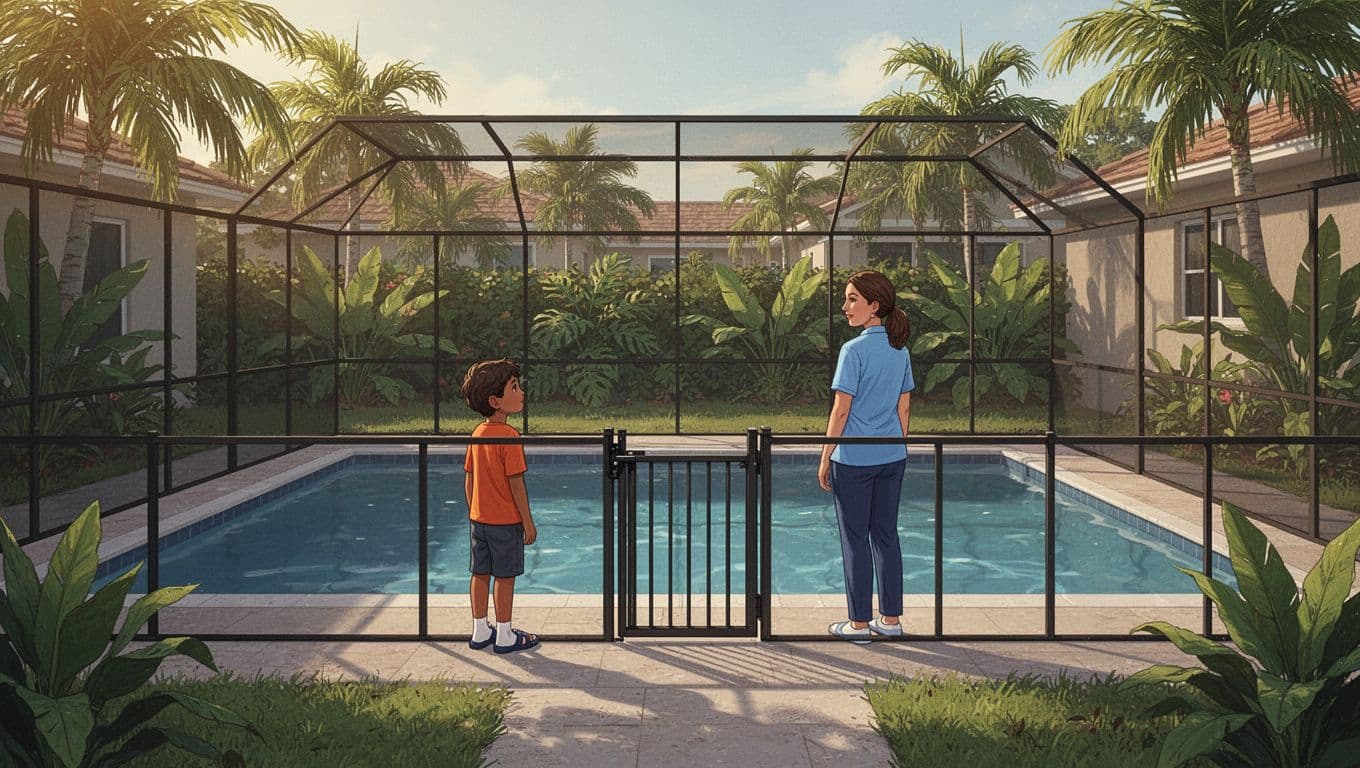
Florida Statutes section 515.29 sets residential pool barrier requirements. For a swimming pool, the outside barrier must be at least four feet high. It must also prevent young children from crawling under, squeezing through, or climbing over.
The barrier should surround the pool perimeter and fully separate the water from the rest of the yard. Use self-latching gates that open outward, away from the pool, and close automatically.
The gate release also needs to stay out of a young child’s reach. Check current state and local requirements before installation, especially if your pool connects to a patio, house, screen enclosure, or waterfront area.
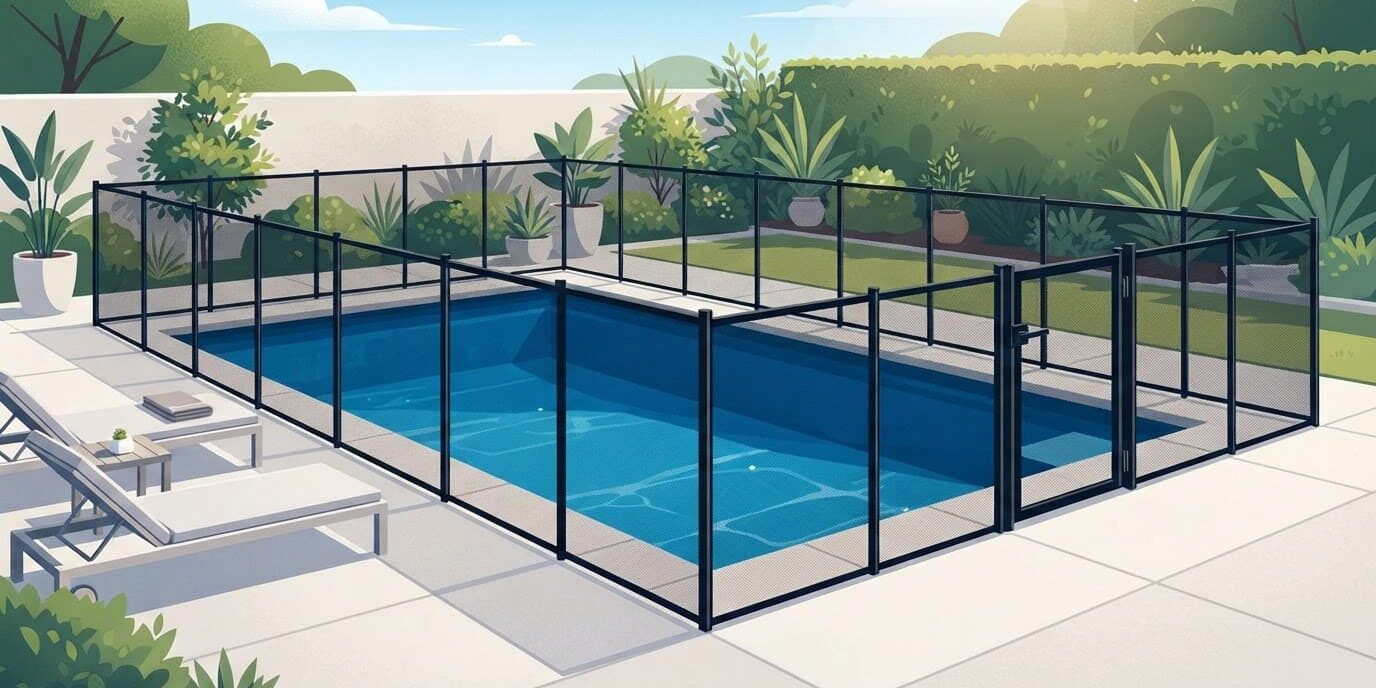
I recommend a black mesh pool fence around every side of the pool, with one secure gate. Mesh keeps the water visible while creating a clear separation. It also helps you notice whether the gate remains closed.
Keep furniture, storage bins, coolers, and large toys away from the fence. Anything climbable can change the safety of an otherwise secure barrier.
Then add the next layers:
- Door alarms can alert you when a child approaches an outdoor exit.
- A gate alarm can provide another warning when someone opens the pool gate.
- A pool alarm may detect a fall into the water, but it cannot replace the fence.
- A safety cover can protect the pool when it is closed and properly secured.
- A rescue hook, ring, phone, and first-aid supplies should stay accessible outside the gate.
Supervision remains part of the water safety plan. Florida Department of Health guidance uses three simple layers: supervision, barriers, and preparedness.
A designated water watcher focuses only on children near water. That adult doesn’t scroll, read, or leave for a quick task. Rotate the role when needed, but name the person clearly.
I tell homeowners to schedule a free pool fence estimate when they aren’t sure whether their current layout gives a child direct access.
Teach safety in a way your child can use
Verbal instructions may not work during excitement, fear, or sensory overload. Visual aids give children a clear message they can see before entering the pool area.

The National Autism Association’s water safety guidance recommends social stories for children with autism and other special needs.
Create the story around your own home. Use photos of the actual pool, fence, gate, door, and safe walking route. Keep each page simple and show one action at a time.
Your story might show these steps:
- I stop at the closed gate.
- An adult opens the gate.
- I walk with my adult.
- I wait for permission.
- I use the buddy system and stay near my adult.
- I exit when the adult says it is time.
Use the same pictures and words every time. Practice when your child feels calm, not when everyone is rushing toward the water.
For a non-speaking child or another child with special needs, use picture cards, gestures, or an established communication device. Practice requesting “swim,” “stop,” “help,” and “finished.” Don’t depend on speech alone.
Review the story before visitors arrive. Guests may leave doors open or misunderstand the gate rules. A simple visual reminder near the exit can help adults follow the same routine.
Gradual steps help with sensory sensitivity
A child who avoids water may need a slow introduction. A child who seeks water may need calm practice around boundaries.
Start with the pool area while the gate stays closed. Let your child observe without entering. Next, practice walking beside the fence and stopping at the gate.
Add one new experience at a time. That might include sitting on the pool steps, touching the water, or practicing a supported exit.
Use a predictable instructor, familiar clothing, and a quiet practice time. Ear protection or other sensory supports may help on the pool deck. Avoid anything that blocks hearing during water activities.
Never force a child into the pool. Fear and surprise can make future lessons harder. Short, successful sessions build better habits than one overwhelming visit.
Choose adaptive swimming lessons and practice real situations
Swimming lessons add an important skill layer, but they never replace supervision or a fence. I recommend finding a qualified swim instructor who understands autism, communication differences, sensory needs, and wandering-related needs.
Ask how the program adapts practical survival training to meet special needs and support children who don’t follow group directions. Children should build swimming skills, including turning toward the wall, floating, reaching for support, climbing out, and requesting help. A one-size-fits-all model may not suit every learner, including neurotypical children.
A dual diagnosis, mobility limitation, seizure disorder, or anxiety may change the lesson plan. Share those details before the first session. A qualified provider can decide which skills need extra time and support.
The Association for Science in Autism Treatment’s water safety resources include additional guidance for families and professionals.
Many instructors recommend completing a later lesson while wearing everyday clothing and shoes. Real falls don’t happen in perfect swimwear. Wet clothes feel heavy, and shoes can change kicking and balance.
Complete this practice under qualified supervision, and never surprise a child with clothing or shoes in the water. Prepare them visually, explain the change, and stop if distress increases.
Florida families can also check adaptive programs through local YMCAs, parks departments, and special needs swim providers. Tampa Metropolitan Area YMCA lists adaptive lessons for children ages 3 through 14 with cognitive and physical disabilities. Check current ages and eligibility before enrolling.
Florida’s swim-lesson voucher program expanded in July 2026, with priority for children ages 1 through 7 with autism. Eligibility, age ranges, dates, and provider rules can change, so check current requirements before registering.
The Florida autism swim safety guidance can help you prepare questions for a potential instructor. Ask about class size, caregiver participation, water depth, emergency plans, and progress updates.
Prepare a wandering prevention plan before an emergency happens
A strong wandering prevention plan starts before anyone goes missing. Keep recent photos of your child on your phone, secure outside access, share a short description with trusted neighbors and caregivers, and note likely routes to water. These steps support water safety and faster emergency response.
Secure doors that lead outside. Add alarms where they make sense. Lock access to sheds, garages, docks, boats, and gates. Store flotation devices where adults can reach them quickly.
If your child goes missing and water access is possible, act immediately:
- Call 911 and say your child is missing and may be near water.
- Tell dispatch that your child is autistic, along with communication needs, clothing, and wandering behavior.
- Have one adult check the nearest pool, pond, canal, or shoreline first.
- Assign other adults to nearby water routes, gates, roads, and hiding places.
- Follow dispatcher instructions if you find your child in the water.
Don’t wait to search the house first. Water may be only seconds away. Don’t assume your child will answer, wave, or follow familiar directions.
If you find a child who isn’t breathing normally, begin CPR if you have CPR training. Follow the 911 dispatcher’s instructions until help arrives.
The Autism Society of Florida’s drowning prevention information offers additional guidance on wandering, water attraction, and prevention planning.
Frequently Asked Questions
Why is pool safety especially important for children with autism?
Children with autism may wander toward water, miss danger cues, or have difficulty responding when someone calls their name. A layered plan helps address these risks through barriers, supervision, visual teaching, and swimming practice.
What type of pool barrier is recommended for a Florida home?
A pool barrier should be at least four feet high and prevent young children from crawling under, squeezing through, or climbing over. A black mesh fence around every side of the pool, with a self-latching gate that closes automatically, provides a clear separation from the water.
Can a pool alarm replace a fence or adult supervision?
No. A pool alarm may provide an additional warning if someone enters the water, but it cannot prevent access or respond to an emergency by itself. Physical barriers and active supervision remain essential parts of the safety plan.
How can parents teach pool safety to a child with autism?
Use simple visual supports, such as photos, picture cards, or a social story showing the steps for stopping at the gate, walking with an adult, and exiting the pool. Practice when your child is calm and introduce new water experiences gradually without forcing participation.
What should I do if my child with autism goes missing near water?
Call 911 immediately and explain that your child is autistic, may be near water, and may not respond to their name or verbal directions. Have one adult check the nearest pool or shoreline while others search nearby routes, gates, roads, and hiding places.
Make the backyard safer with a complete plan
A Florida pool safety plan works best when its layers of protection each have a job. The fence blocks access. The gate protects the opening. Alarms provide warning. An assigned water watcher provides active supervision. Visual teaching and lessons build useful skills. Together, these steps support drowning prevention and make water safety part of your family’s ongoing routine.
I recommend walking through your property at your child’s eye level. Check every door, latch, chair, gate, pond, canal route, and climbable object as part of your safety precautions.
When you’re ready to review your pool area, Get a FREE Quote for a professionally installed black mesh safety fence. A clear barrier, secure gate, and consistent routine can bring real peace of mind to your Florida home.