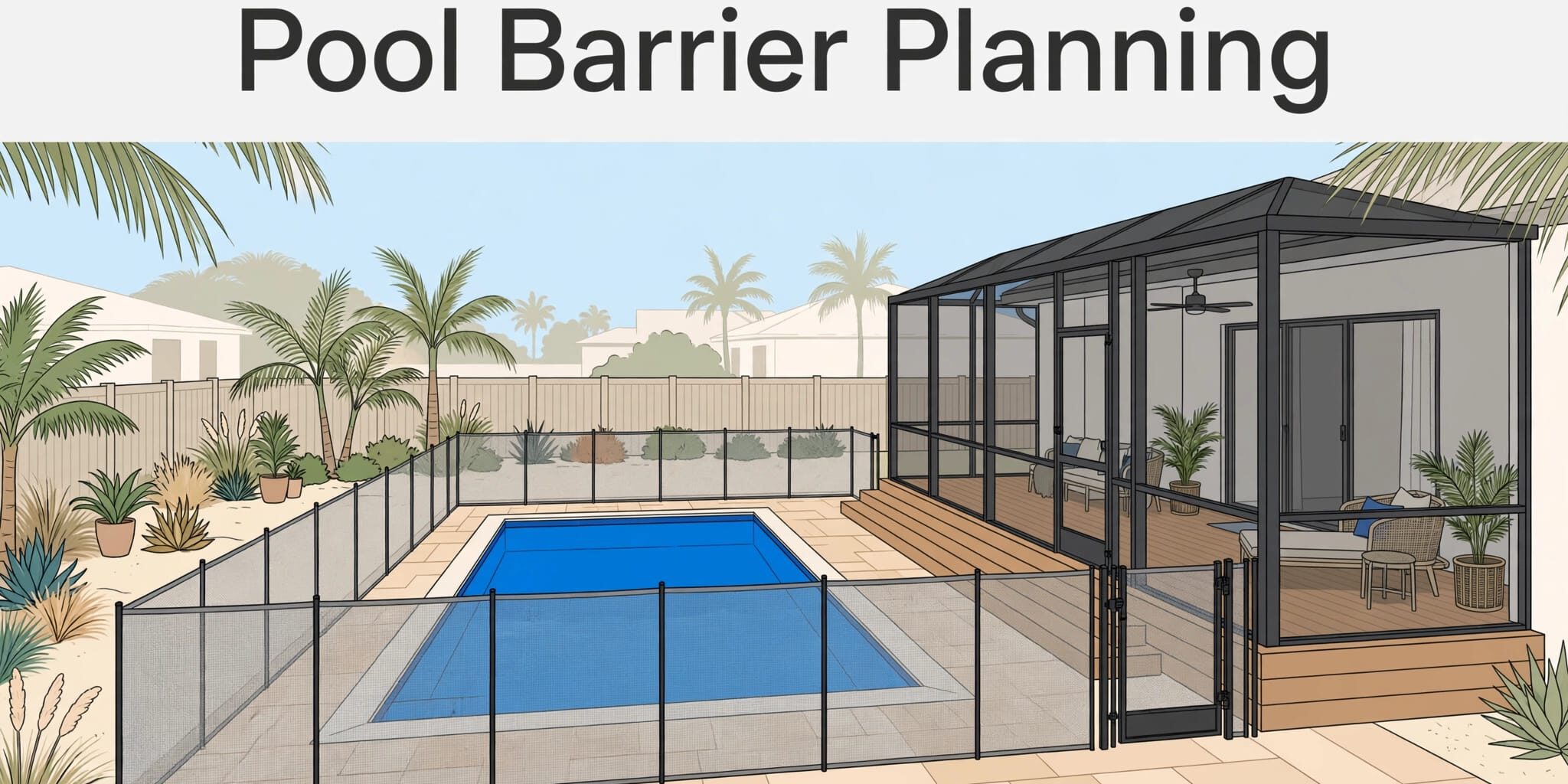
A beautiful new pool should also have a clear safety plan from day one. That work belongs on the first backyard drawing, not after the deck is finished.
For new pool construction in Southwest Florida, a removable mesh pool fence can serve as a practical safety fence. It can help create a four-sided pool safety barrier while accounting for routes through the lanai, doors, and yard. Coordinate the fence line, gate location, lanai access, and deck layout with your pool builder before construction begins.
Key Takeaways for a Safer Pool Area
- Plan a four-sided, removable mesh pool safety barrier before finalizing deck, patio, and landscaping plans. Account for Florida’s 48-inch minimum height.
- Florida requires a residential pool barrier to stand at least 48 inches high on the outside.
- A pool gate must swing away from the water and close and latch by itself.
- Doors, windows, alarms, covers, and supervision all matter. A safety net adds protection but doesn’t replace a compliant barrier, secure gate, supervision, or controlled access.
- Local departments may add details for permits, gate hardware, inspections, and barrier placement.
Start Pool Barrier Planning Before the Pool Is Built
A pool builder should coordinate the shell, plumbing, deck, lanai, equipment, and pool safety barrier during the swimming pool design. Finalize that layout before concrete and landscaping. Waiting until the concrete is poured can create tight turns, awkward gate locations, and expensive changes.
A removable mesh pool fence works best when it creates a simple, complete line around the water. It should separate the pool from the home, screened lanai, patio, lawn, and play areas. Leave enough room for adults to use the gate comfortably.
Draw the full backyard, not only the pool
The first drawing should include the house, screened lanai, pool equipment, doors, sidewalks, landscaping, and planned furniture. That layout shows where children could reach the water.
Leave enough deck space for adults to walk through the gate comfortably. Also leave room for lounge chairs and tables outside the barrier. Furniture placed beside a fence can become an easy climbing step.
Choose pool isolation over a yard boundary
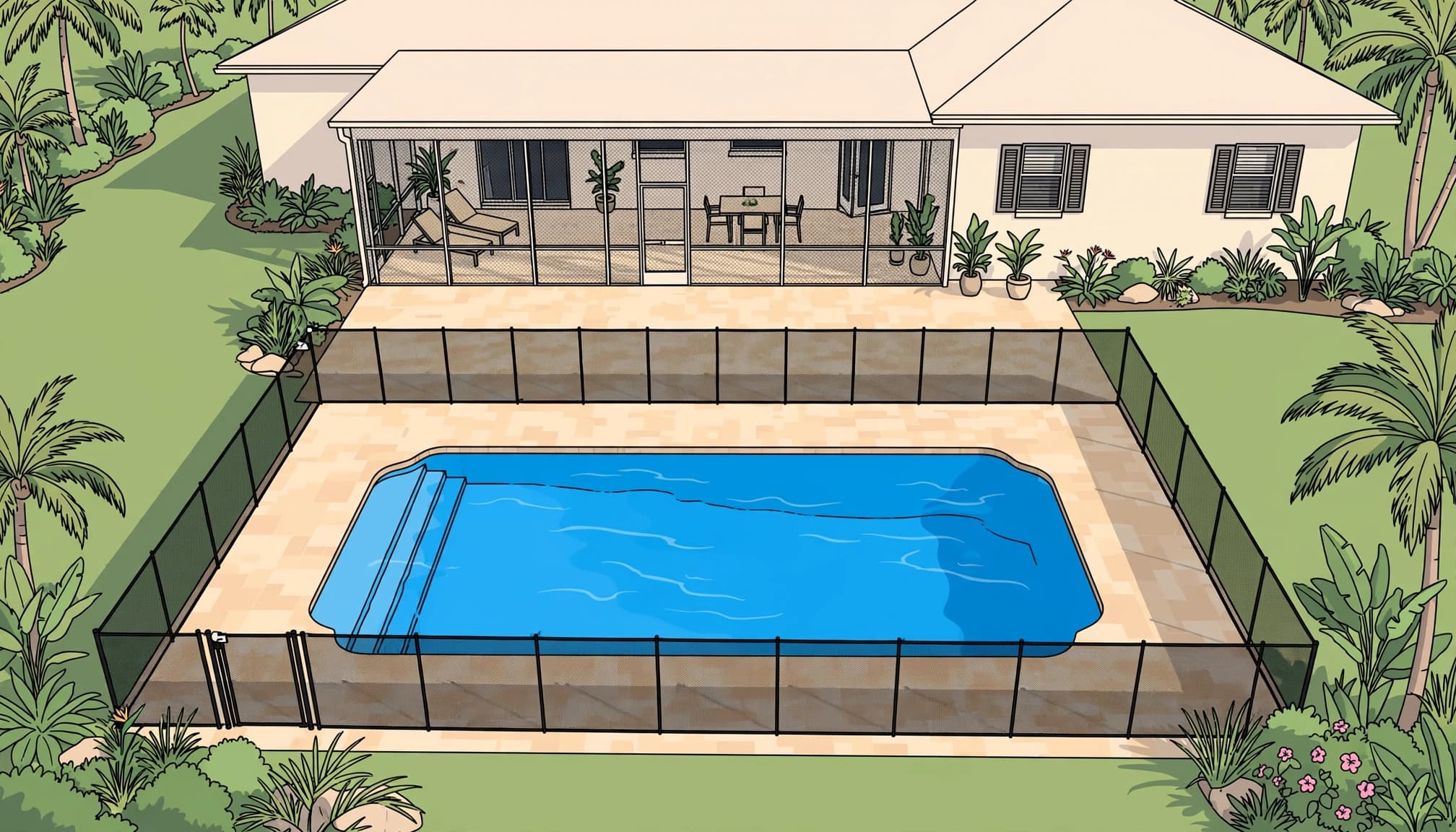
A property fence may keep neighbors out, but it doesn’t always protect the pool from the household. A four-sided isolation fence creates a separate pool zone inside the backyard.
A review in the National Institutes of Health supports four-sided pool isolation fencing with secure gates. That extra boundary gives an adult more time to notice a child heading toward water.
A screen enclosure may surround a pool, but it doesn’t automatically create a child-resistant pool barrier.
Florida Pool Barrier Requirements Start at 48 Inches
Florida Statutes Chapter 515 gives homeowners a statewide starting point. Under Florida Statutes Section 515.29, a residential swimming pool barrier must stand at least four feet high on the outside.
The barrier must also resist easy access. It can’t have openings, gaps, protrusions, or nearby features that let a young child crawl under, squeeze through, or climb over.
For any rigid portion or approved structural component, the vertical member and horizontal member layout should match the approved plans. The international residential code may provide background reference material only. Florida statutes, applicable Florida requirements, approved plans, and the local authority control the project.
Watch finished grade and changing ground levels
Barrier height begins at the outside grade. Inspectors also evaluate bottom clearance and opening size within the planned barrier.
Measurements must be checked after grading, pavers, mulch, and landscaping are installed. That detail matters around sloped yards and newly finished pool areas.
A low spot under the mesh can create a problem after heavy rain or erosion. Homeowners should inspect the planned fence line after grading, not only before it begins.
The fence should also sit far enough from the pool edge. Someone who gets through the barrier should not fall directly into the water.
Keep climbable objects away from the fence
Planters, benches, storage boxes, coolers, toys, and pool equipment need their own space. A child can use ordinary backyard items as steps.
Keep the barrier line clean and easy to inspect. Smooth runs around the pool often work better than copying every small curve in the deck.
Florida rules focus on child access, not appearance alone. A fence can look great and still leave a weak point.
Design Gates and Access Routes Carefully
The gate is the working part of the barrier. It gets used during swim time, cleanup, parties, and everyday backyard life. It must work every single time.
Florida requires pool-access gates to swing outward, away from the pool. They must be self-closing and self-latching, with a locking device.
Put the gate on the route adults already use
The everyday pedestrian gate should sit on a convenient adult path near the lanai or patio.
A hidden gate behind furniture creates frustration. That can lead to people propping it open. A convenient gate supports safer habits.
Homeowners should also plan for pool service access, pet routes, and outdoor kitchen areas. Every frequent path needs a clear access plan.
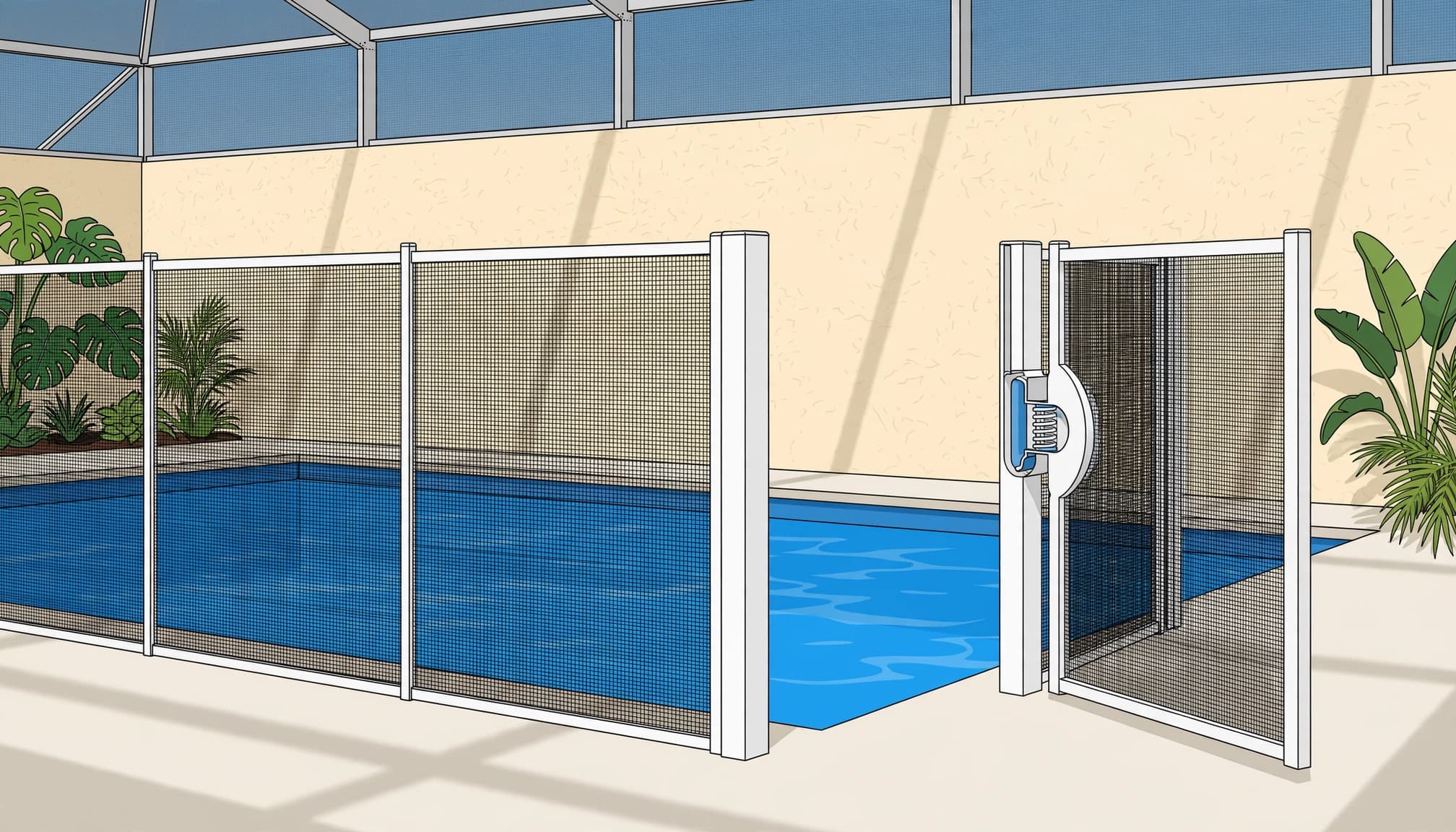
Test the gate before final inspection
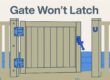
During new construction, confirm that the gate swings away from the pool and closes without a push. It should engage the gate latch without sticking, bouncing open, dragging, or missing.
Coordinate the gate hardware and final test with the pool builder before inspection. The locking device should remain difficult for a young child to reach.
Rain, sand, leaves, and daily use can affect gate operation. Test the gate before every gathering and after major storms. Local rules may add requirements for gate placement, openings, and hardware.
Plan Around House Walls, Doors, and Windows
Many Southwest Florida pools sit close to the house and lanai. That setup looks inviting, but it needs careful access control.
Florida’s statutory language allows a house wall to form part of an approved pool safety barrier. A wall without pool-access doors or windows can serve as that protective boundary.
Confirm local rules for direct pool access
Door and window requirements can vary by local code and approved safety feature. The house wall must be reviewed for every direct-access door or window before materials are ordered.
Miami-Dade County’s pool barrier guidance describes UL 2017 exit alarms for doors and windows with direct pool access. Its 85 dB A rating at 10 feet is an example, not a Southwest Florida requirement.
Homeowners should obtain written direction from the applicable Lee, Charlotte, Sarasota, or Collier County building department. Don’t treat Miami-Dade guidance as a local rule.
Use alarms as another layer, not the only plan
A door alarm can alert adults when a direct-access door opens. It can’t replace the physical barrier or active supervision.
Miami-Dade guidance also describes self-closing, self-latching direct-access doors. It lists a 54-inch release mechanism height for that door safety option.
That measurement doesn’t automatically apply to every pool fence gate. Gate details should match the approved local plan and manufacturer instructions.
Add Layers Beyond the Swimming Pool Barrier
A new residential swimming pool needs several coordinated protections beyond its physical barrier. A well-planned mesh barrier creates a clear boundary around the water.
Other safety features add protection when a gate gets left open or an adult becomes distracted. Florida recognizes options such as barriers, alarms, approved covers, and controlled home access.
A safety net may provide another layer, but it isn’t a substitute for a compliant four-sided barrier, secure gate, active supervision, or local approval.
Know what an approved cover means
A regular solar pool cover isn’t necessarily a compliant safety cover. Homeowners should verify that a chosen product meets ASTM F1346 and fits the pool correctly.
The ASTM F1346-23 safety cover standard covers performance testing, labeling, and safety protocols for pool, spa, and hot-tub covers.
The product must be installed and used as intended. Homeowners should confirm acceptance with the local permitting authority and pool builder.
Keep supervision at the center
Alarms, covers, cameras, and fences help create time and distance. They can reduce opportunities for child drowning, but they don’t replace active adult supervision near water.
During parties, one adult should watch children in the pool area. Phones, grilling, and conversations can wait.
Pool rules should stay simple. Close the gate. Keep toys away from the fence. Never leave children near water without an attentive adult.
Get Ready for Permits and Final Inspection
A barrier plan should go to the local building department early. Lee, Charlotte, Sarasota, and Collier County properties may have different practical requirements.
The final inspection shouldn’t be the first time someone tests the gate or checks the barrier line. A pre-inspection safety inspection can prevent delays.
Bring the right information to the permit conversation
Homeowners should prepare a measured site plan for the pool safety barrier before the builder locks in the deck and landscaping. It should show the pool, house, lanai, proposed mesh pool fence, gates, direct-access doors and windows, equipment, and finished grades.
Ask the building department and applicable local authority about:
- Which local code and adopted building code provisions govern the permit.
- Whether the international residential code is useful as reference material, rather than the controlling Florida rule.
- Gate swing direction, latch rules, hardware requirements, and inspection expectations.
- Whether a door alarm or another feature is required or simply supplemental.
- Doors, windows, alarms, covers, and documents needed for final approval.
Coordinate with the pool builder on the measured plan, gate-hardware review, barrier-line check, and final walk-through before scheduling inspection. This helps the mesh pool fence fit the actual deck and pool shape.
Do a final walk-through like a child would
Walk the yard at a child’s eye level. Look for chairs, planters, loose panels, open routes, low areas, and anything near the fence.
Test every gate several times. Check that it swings away from the pool, closes fully, and latches on its own.
Review the completed layout with the pool builder and local authority before construction details are finalized.
Frequently Asked Questions
What is the minimum height for a Florida pool barrier?
Florida requires a residential pool barrier to be at least 48 inches high on the outside. Local building departments may add details about measurement and placement.
Homeowners should measure after the finished grade, pavers, mulch, and landscaping are complete. A change in ground height can affect compliance.
Does a pool gate have to close and latch automatically?
Yes. Florida requires a pool-access gate to swing outward, away from the water. It must also be self-closing and self-latching after each use.
A gate that needs a push to latch needs service. The barrier only works when the gate secures itself every time.
Can an above ground pool wall count as a barrier?
Florida law can allow an above ground pool structure to serve as a barrier. A compliant barrier may also be mounted on the pool structure, subject to approval from the local building authority.
Ladders and steps still need control. They must be secured, locked, removable, or protected by an approved barrier arrangement.
Can a safety net replace a pool barrier?
A safety net may provide an additional layer of protection, but it doesn’t automatically replace the required four-sided barrier, secure gate, or supervision plan. Confirm the complete safety arrangement with your local building authority.
A Safe Pool Plan Starts Before the First Swim
The strongest pool barrier planning starts with a simple goal: make unsupervised access to the water harder. A four-sided removable mesh fence, a dependable gate, controlled home access, and active supervision work better together.
A pool should feel like the best part of the backyard. With a clear safety plan, families can enjoy it with more peace of mind.
Questions or ready to get started? Call us at (941) 500-9484