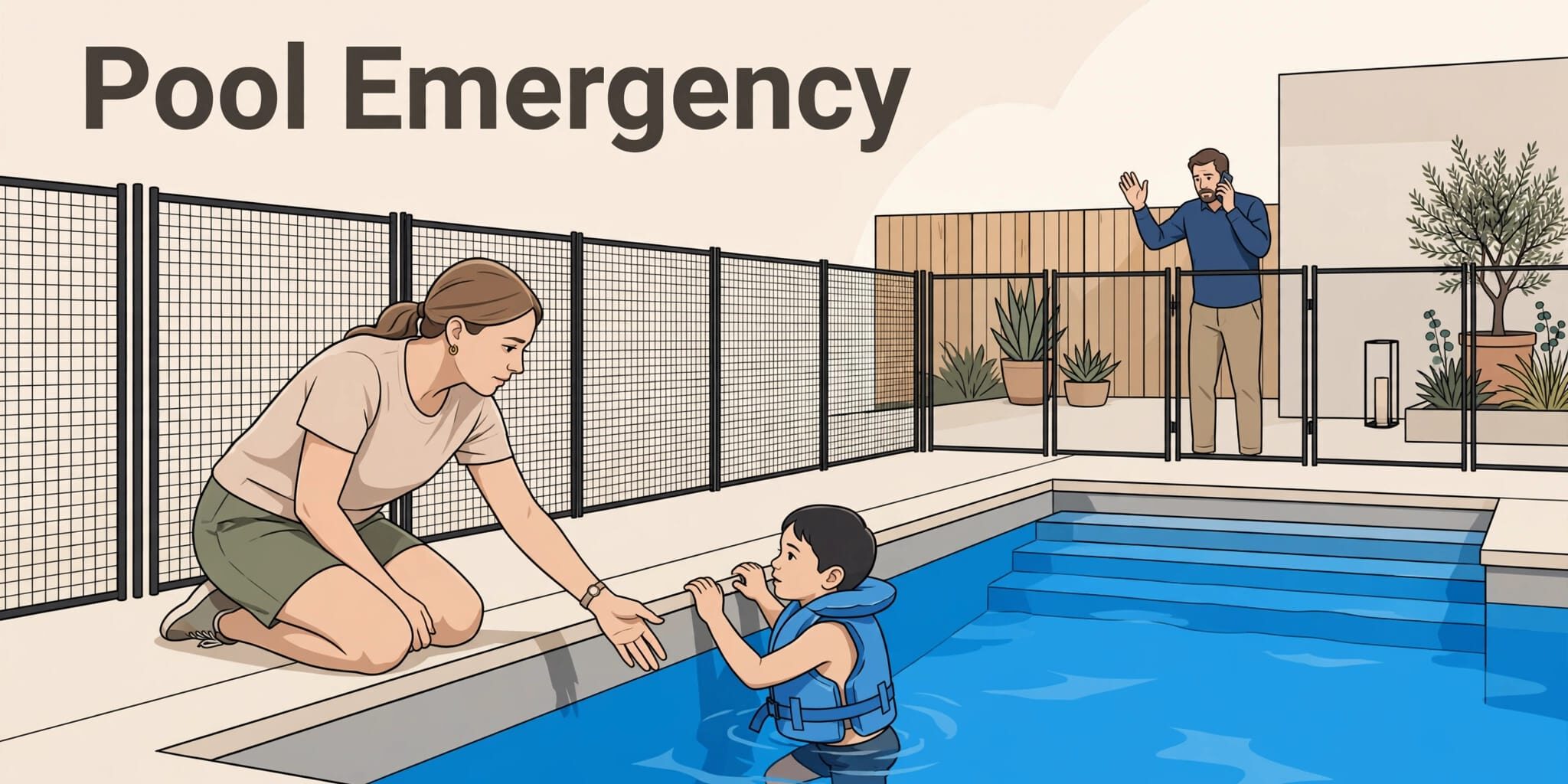
At a busy backyard gathering, a child can slip away before anyone notices. When a child enters pool water unexpectedly, every second feels enormous.
Fast, calm action protects the child. Drowning prevention around backyard pools requires layered water safety measures, especially with young children, visiting families, or pets nearby. Accidental deaths can follow a brief lapse in supervision. Homeowners also need safeguards around swimming pools.
If a Child Enters Pool Water, Act First
Stay calm and move with purpose. Panic can frighten a child and complicate a safe rescue.
Get the child out safely
- Call out short, clear directions if the child is awake. Say, “Hold the wall” or “Turn toward the steps.”
- Move close and guide the child toward the stairs or pool edge. Remove the child only when you can do so safely.
- If you can’t reach the child safely, call 911 immediately. Ask another adult to help if available.
Call 911 and begin CPR if needed
- Check responsiveness and breathing immediately. Call 911 if the child is unresponsive or not breathing normally.
- Begin CPR with rescue breaths when appropriate. Follow the dispatcher’s instructions until help arrives.
- Use an AED as soon as one becomes available. Continue monitoring after normal breathing returns.
The CDC’s drowning prevention guidance stresses that CPR can save a life while awaiting paramedics.
Seek urgent medical evaluation after any submersion. Get help quickly for blue lips, worsening breathing, persistent coughing, vomiting, confusion, unusual sleepiness, or abnormal behavior.
Avoid common mistakes. Don’t delay 911, shake the child, leave the child alone, or attempt an unsafe rescue.
Keep a charged phone, rescue hook, reaching pole, and first-aid supplies near the pool. Take cpr training and learn the home address and pool access points.
Stop Unsupervised Pool Entry Before It Starts
Supervision matters, but nobody can stay perfect every minute. A strong pool barrier buys time when life gets busy.
Install a four-sided pool fence
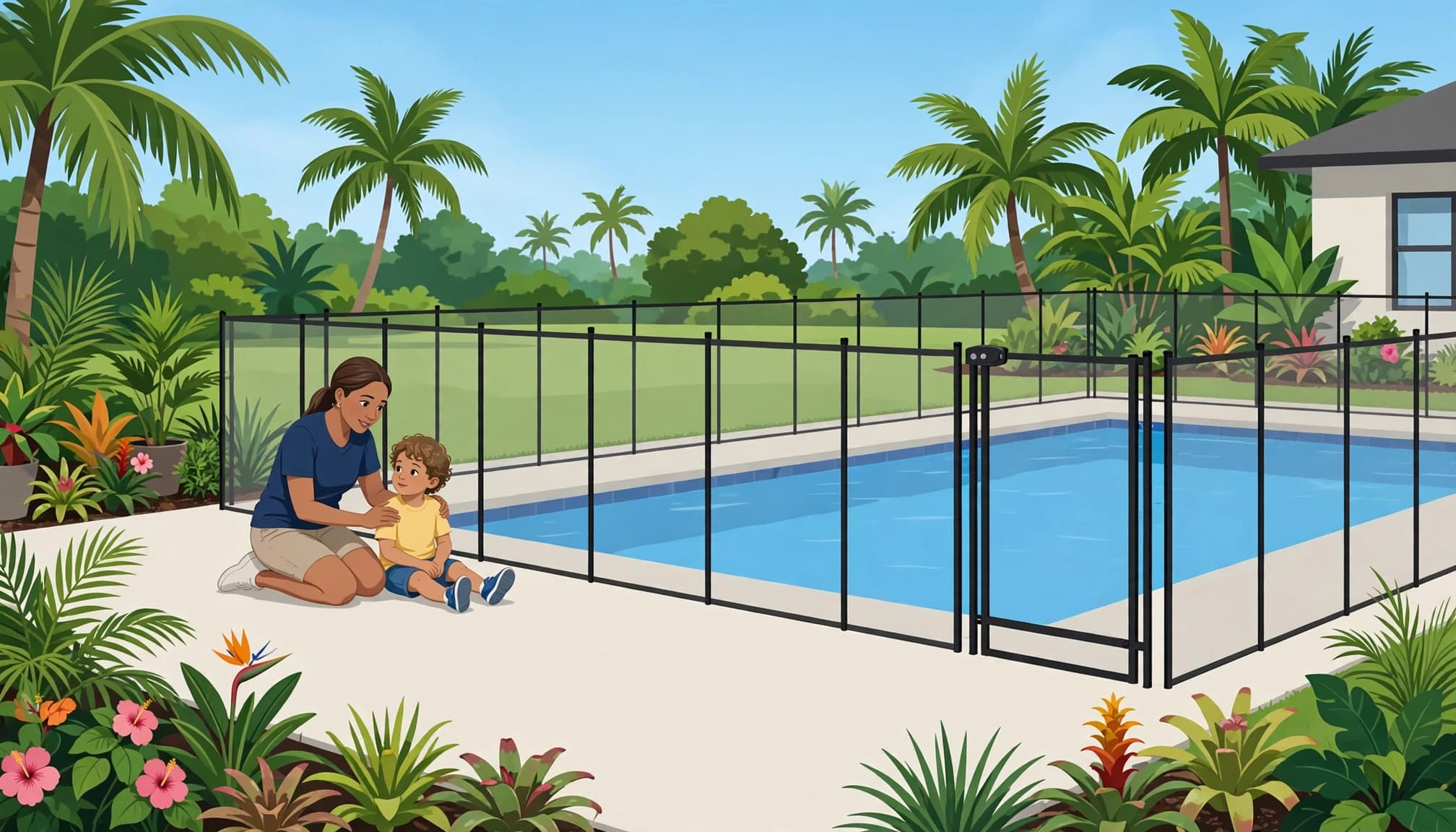
A removable mesh pool fence should fully separate the water from the house and yard. It should be difficult to climb and free of gaps underneath.
Pool Safely recommends a non-climbable, four-sided fence at least four feet high around the entire pool. Five feet or higher is preferable.
Keep patio furniture, toys, coolers, and planters away from the fence. A curious toddler can turn almost anything into a climbing step.
Inspect pool drains regularly, and make sure their covers remain secure and compliant.
Homeowners can contact Pool Fence SWFL for a free estimate when they need a barrier that fits their pool deck and family routine.
Test the self-latching gate every month
The gate should swing away from the pool, close by itself, and latch every time. A gate that needs a push is not ready.
Test it from fully open, halfway open, and barely open positions. Check for sand, storm debris, sagging hinges, or a latch that misses.
A gate that works most of the time leaves the pool accessible at the worst possible moment.
Never use rope, hooks, clips, or makeshift ties to hold a pool gate closed.
Add Supervision, Alarms, and Emergency Readiness
Layers work together. An alarm can warn a caregiver, while a fence can slow access before a child reaches water.
Assign one focused Water Watcher
During swim time, name one adult as the Water Watcher. That person watches the water without phones, cooking, conversations, or quick trips inside.
Infant water safety requires an adult to stay within arm’s length of infants and toddlers. When responsibility changes, the adults should say it clearly.
“Someone is watching” isn’t enough. A named adult and a clear handoff bring real peace of mind.
Secure doors and test alarms
Secure doors and windows that open toward the pool area, and use door alarms for another warning. Gate alarms can also alert caregivers when access opens.
When swimming ends, secure the area during non-swim times. Close and latch gates, doors, and other access points.
Pool alarms may detect surface movement or underwater motion. Test pool alarms often, replace batteries before they fail, and keep alert receivers where adults can hear them.
Alarms and barriers are safety devices that support, but never replace, active supervision. They don’t physically stop a child, so keep gates closed and stay alert.
Swim Lessons and Homeowner Responsibility
Swimming skills help, but they don’t make a child drown-proof. Children can panic, tire quickly, or fall in unexpectedly.
Begin age-appropriate swim lessons
The American Academy of Pediatrics says many children can begin swim lessons after their first birthday. Lessons should match the child’s age, comfort, and ability.
Families should practice simple habits too. Children should ask before entering the pool area, walk on wet decks, find the wall, and use the steps.
Use properly fitted Coast Guard-approved life jackets for young children and non-swimmers near water. Life jackets don’t replace supervision, and pool covers can add protection without replacing a secure barrier.
Families should inspect pool drains and use compliant drain protection to help address suction entrapment hazards.
Treat the pool as a serious property risk
Unsecured access can increase drowning risk and may contribute to accidental deaths, depending on the circumstances. A residential pool may create an attractive nuisance concern if a neighborhood child gets inside.
Homeowner liability isn’t automatic, and each situation depends on the facts and local rules. Still, poor barriers, broken gates, and known access problems can raise serious questions. A Florida attractive-nuisance overview explains why homeowners should take pool access seriously.
Local building rules and HOA requirements may also apply. Homeowners should confirm local requirements before changing a barrier.
Key Takeaways
- These pool safety tips start with checking the pool first and calling 911 without delay if a child is missing.
- A four-sided removable mesh pool fence and self-latching gate add critical separation from the water.
- One distraction-free water watcher should supervise every pool gathering.
- Swimming skills, alarms, and cpr training add protection. Pool drains reduce entrapment risks, while pool covers limit access when the water isn’t in use.
- Monthly gate checks can catch small problems before they become dangerous.
Frequently Asked Questions
Can lessons replace a pool fence?
No. Swim lessons build helpful skills, but life jackets don’t replace close supervision or a secured pool fence. A child can become tired, scared, or distracted in seconds.
What should homeowners do after swimming ends?
Remove toys from the water, confirm every child has left the pool area, close and latch the gate, and check alarms. Pool covers can help, but a floating toy may still draw a child back toward the pool.
A Safer Pool Starts With Layers
The best response after a child enters the pool is fast, calm action. The better outcome is stopping unsupervised access before it happens.
A reliable mesh barrier, a working gate, focused adults, and emergency preparation protect families every day. Homeowners ready to improve pool safety can Get a FREE Quote.
Questions or ready to get started? Call us at (941) 500-9484