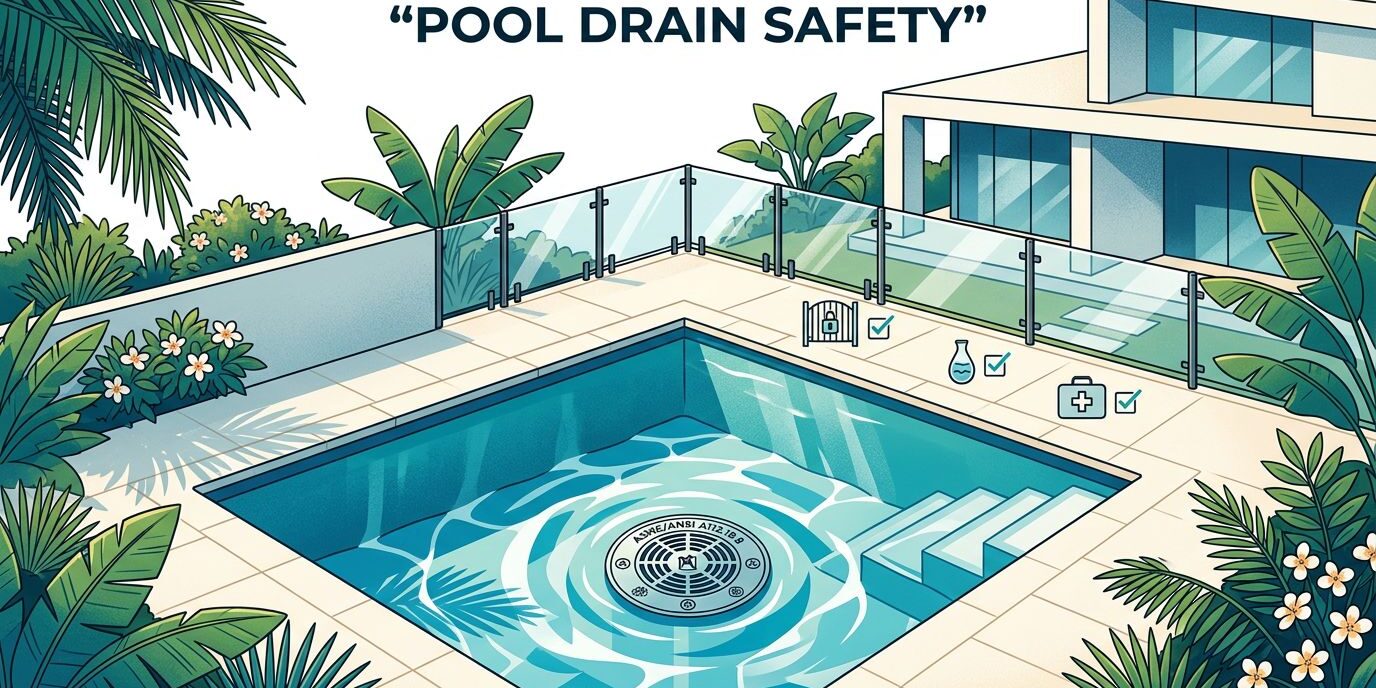
Some of the most serious pool injuries start with a drain that looks harmless.
That is why pool drain cover safety belongs on every Florida homeowner’s pool safety checklist, especially when young children visit. I tell families that a safe pool needs more than clean water and a working pump. The cover, circulation system, adult supervision, and barrier must all do their jobs. Start with the drain, then build the rest of your backyard safety plan around it.
Key Takeaways
- A cracked, loose, missing, expired, or incorrect drain cover can create serious suction-entrapment hazards, especially for children.
- Replace drain covers only with certified covers that match the drain fitting, pump flow, hydraulic design, and manufacturer requirements.
- Florida homeowners should have drains professionally inspected before each swim season and after repairs; keep the pool closed until unsafe hardware is fixed.
- Closing a main drain or adding an SVRS does not automatically remove the risk, and neither replaces proper drain design, a four-sided pool fence, or direct adult supervision.
Why a secure drain cover matters
Main drains pull water toward the pool’s filtration system. Normally, water moves through the cover without trouble. However, a swimmer can seal a damaged, flat, or undersized cover. The pump may then hold that person in place with dangerous force.
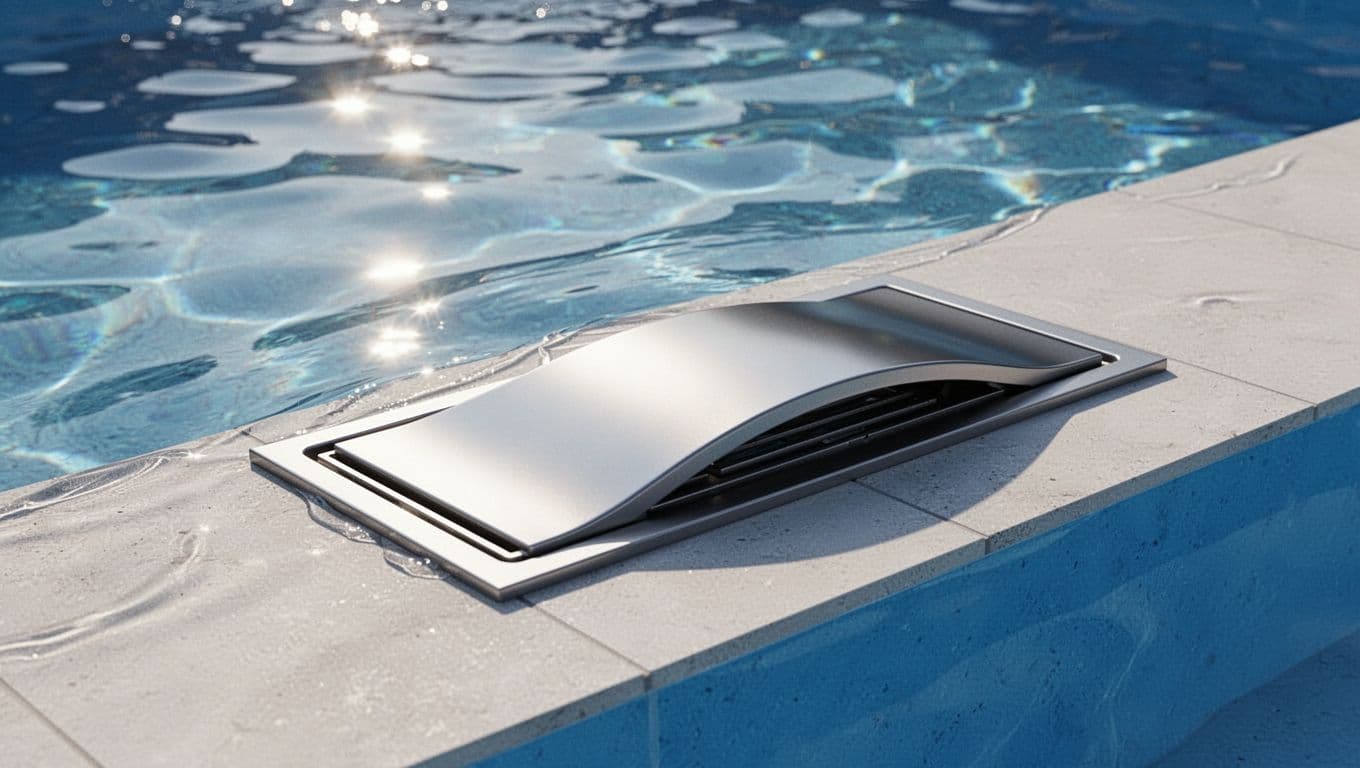
Older flat drain covers create the largest concern. Their flush shape can let a child’s body cover much of the opening. Modern anti-entrapment drain covers use a curved design or domed profile. That shape spreads water across several openings and makes a complete seal harder.
Plastic can weaken under Florida sun, pool chemicals, and constant water exposure. Screws can loosen, too. Even an intact cover may have reached the end of its service life.
The replacement must match the drain fitting, pool pump flow, and manufacturer instructions. A generic grate may fit the hole but still create a dangerous restriction. For installations where those requirements apply, choose a VGB compliant cover marked for the applicable ASME/ANSI standard.
The Texas DSHS VGB explanation describes the newer entrapment requirements for pool drain covers. I check the manufacture date, flow rating, secure fasteners, and service-life marking.
A clean pool deck doesn’t prove a safe drain. If the cover is cracked, loose, missing, or expired, keep everyone out. Call a licensed pool professional before anyone swims again.
Five ways “suction entrapment” can hurt a swimmer
Suction entrapment doesn’t happen in just one way. The Virginia Graeme Baker Pool and Spa Safety Act identifies five main hazards:
- Body entrapment occurs when suction holds a swimmer against the drain cover.
- Hair entrapment happens when long hair catches inside the cover or fitting.
- Limb entrapment can pull an arm, leg, hand, or foot into an opening.
- Mechanical entrapment occurs when jewelry, swimsuits, or equipment catches.
- Evisceration involves severe suction injuries around an opening, often after sitting on it.
Children face extra risk because they have smaller bodies and may not understand suction. Panic can make escape harder. A child may also reach toward a drain while playing underwater.
A CDC report identified 33 cases involving drain suction between 2009 and 2013. Serious injury occurred in 85 percent of those cases. Nearly 70 percent involved young children.
The CPSC’s VGB safety update reported zero child deaths related to drain entrapment in public pools and spas at the law’s ten-year mark. That progress matters, but damaged hardware still creates danger.
Teach children one simple rule: “When you see a drain, stay away.” Tie back long hair before swimming. Remove loose jewelry, and never sit on a drain. These habits support the hardware, but they cannot replace supervision.
What the VGB Act means in Florida
Virginia Graeme Baker was seven years old when she died after entrapment at a spa drain. Her death helped lead Congress to pass the VGB Act in December 2007.
The federal VGB law focuses on public swimming pools and spas. The Federal Register record for the VGB Act states that the law addresses drain entrapment and accidental drowning. Spa hazards deserve separate attention, because a hot tub drain can pose similar risks in private settings.
Florida’s requirements still matter to homeowners. Chapter 515 and Florida Building Code rules cover residential barriers, alarms, pool covers, and pool construction. Florida Department of Health guidance also addresses drain grates and anti-entrapment equipment in permitted pool settings.
Here is where many homeowners get confused. A private home pool may not fall under every public-pool provision of federal law. However, Florida requirements can still call for compliant covers during new construction or renovations.
Insurance requirements and local permitting rules may add another layer. Therefore, don’t rely on a general internet answer for an older pool. Ask your county building department or a Florida-licensed pool contractor about your exact setup.
Flow matters, too. Florida guidance gives example open areas of 22 square inches at 100 gallons per minute. The examples rise to 43 square inches at 200 gallons per minute and 64 at 300.
Those figures show why a professional must evaluate the entire hydraulic design, not treat them as universal replacement specifications. Some pools need an unblockable drain cover. Others need dual drains or another anti-entrapment device.
A practical Florida pool drain inspection
I recommend a pool inspection before each swim season and after pool repairs. A qualified professional should handle the detailed inspection, especially when the cover sits underwater.
This pool safety check is only a visual screening, not a substitute for a professional underwater inspection.
Use this quick homeowner check:
- Turn off the pump before anyone approaches the drain.
- Look for cracks, missing pieces, sharp edges, loose screws, or discoloration on the drain covers.
- Check the manufacture date and stated service life.
- Confirm the correct certification and flow information.
- Make sure the cover sits securely without rocking or gaps.
- Ask whether it matches the pool pump’s actual design flow.
- Check whether the pool has one drain, dual drains, or an unblockable drain.
- Request written confirmation after a licensed contractor completes the work.
Never remove a drain cover while the pump runs. Never replace it with a grate from another pool. Never place a homemade screen, weight, or object over the opening.
A single drain deserves extra attention. Many safer designs use two suction points, which reduce the chance of one blocked opening carrying the full flow. Some installations place the drains at least three feet apart, depending on the system design and code.
The right repair may involve more than a new cover. Older pools may need to be retrofitted rather than receive a simple cover replacement. A contractor may need to inspect the sump, piping, pump, filtration system, and return system. Complex work can require engineering, permits, and county approval in Florida.
Can closing the main drain remove the risk?
Usually, no. Closing a main drain doesn’t automatically remove suction from the pool. Water may still move through another outlet, skimmer, cleaner line, or damaged fitting.
A homeowner should never improvise by sealing a drain with a loose plate or heavy object. That fix can shift, block circulation, damage equipment, or create another hazard. It also leaves no proof that the system meets current requirements.
A professional may permanently disable a drain during a permitted renovation. That decision requires a review of the entire hydraulic system. The pump still needs a safe circulation path.
A safety vacuum release system (SVRS) monitors suction and reacts when a blockage causes a rapid pressure change. Depending on the system, it can release suction or shut off the pump.
SVRS technology adds protection, but it doesn’t excuse a cracked or incorrect drain cover. It also cannot supervise a child or stop access to the pool. I see it as one of several safety devices, not a replacement for proper drain design.
Ask a licensed contractor whether your pool needs an SVRS, dual drains, an unblockable cover, or a combination. A good recommendation should address pump flow and the complete circulation system.
Pair drain protection with a pool fence
A drain cover protects swimmers already in the water. A fence helps stop children from entering the water without an adult.
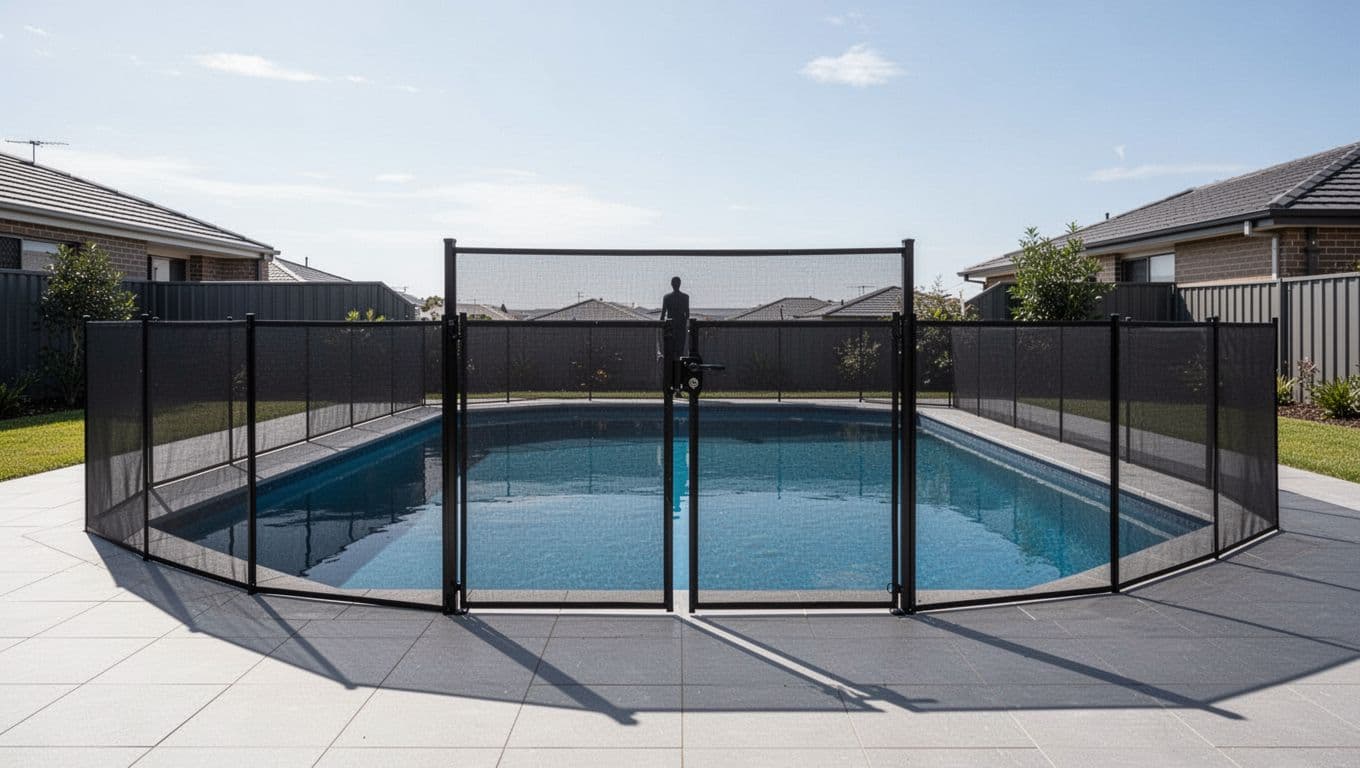
For Florida homes, I prefer a four-sided black mesh barrier with a self-closing, self-latching gate. It keeps the barrier close to the pool, gives adults a clear view, and removes easy access points.
The fence should surround every side of the pool, not only the side facing the house. Keep chairs, toys, tables, and coolers away from the barrier. Check the gate latch whenever children visit.
A fence doesn’t replace adult supervision. Put one designated adult in charge whenever young children swim or play nearby. Avoid phone distractions, and keep rescue equipment nearby.
These safety features work together, but a fence never replaces supervision. I recommend three simple layers:
- A certified, correctly installed drain cover.
- A complete four-sided barrier with a secure gate.
- Direct adult supervision whenever children swim or play nearby.
If you need help planning a barrier around a Southwest Florida pool, you can contact Pool Fence of SWFL. You can also Get a FREE Quote for a custom pool safety fence installation.
Maintaining protection around a Florida pool drain
Drain protection requires ongoing attention. Covers age, pumps change, and renovations can alter circulation.
I’d take a cracked cover seriously, even if the pool looks clean and the pump sounds normal. I’d also question any cover without a date, certification marking, or visible flow rating.
Ask for the exact cover model, installation date, service life, and flow rating. Keep those details with your pool records. Set a calendar reminder before the stated replacement date.
Most importantly, treat the drain as a no-play area. Children shouldn’t touch, sit, stand, or swim close to it. Adults should know where the pump shutoff is.
When a drain needs repair, keep the pool closed. A licensed inspection gives you a clear answer and a safe path forward.
Frequently Asked Questions
How often should a pool drain cover be inspected?
A homeowner should perform a visual check before each swim season and after pool repairs. A qualified professional should handle detailed underwater inspections and confirm the cover’s condition, service life, certification, and flow rating.
Can I replace a damaged drain cover myself?
You should not use a generic grate or homemade screen as a replacement. A licensed pool professional should select and install a cover that matches the drain fitting, pump flow, hydraulic design, and applicable requirements.
Does closing the main drain eliminate suction-entrapment risk?
Usually, no. Water may still move through another outlet, skimmer, cleaner line, or damaged fitting, so a professional must evaluate the entire circulation system before disabling a drain.
Is an SVRS enough to make a pool drain safe?
No. A safety vacuum release system can reduce suction after a blockage, but it does not replace a proper drain cover or safe hydraulic design. It also cannot replace a pool fence, direct supervision, or rules that keep children away from drains.
What should I do if a pool drain cover is cracked or loose?
Keep everyone out of the pool and turn off the pump before approaching the area. Contact a licensed pool professional and do not reopen the pool until the drain and circulation system have been inspected and repaired.
A safer Florida pool starts with the drain
A drain cover is small, but its safety role is serious. Curved, certified covers reduce suction hazards, while proper flow matching protects the circulation system.
Florida homeowners also need a complete barrier, a working gate, direct supervision, and simple rules children understand. The strongest protection, and the foundation of pool safety, comes from these layers working together.
I would never let a clean deck or clear water reassure me about an old drain. Check the cover, ask the right questions, and close the pool until unsafe hardware gets fixed. Get professional help before reopening it. That small decision can protect a child when nobody expects trouble.