A pool can be the best part of a Florida home. It can also raise questions during an insurance review, property inspection, or home sale, along with household liability concerns.
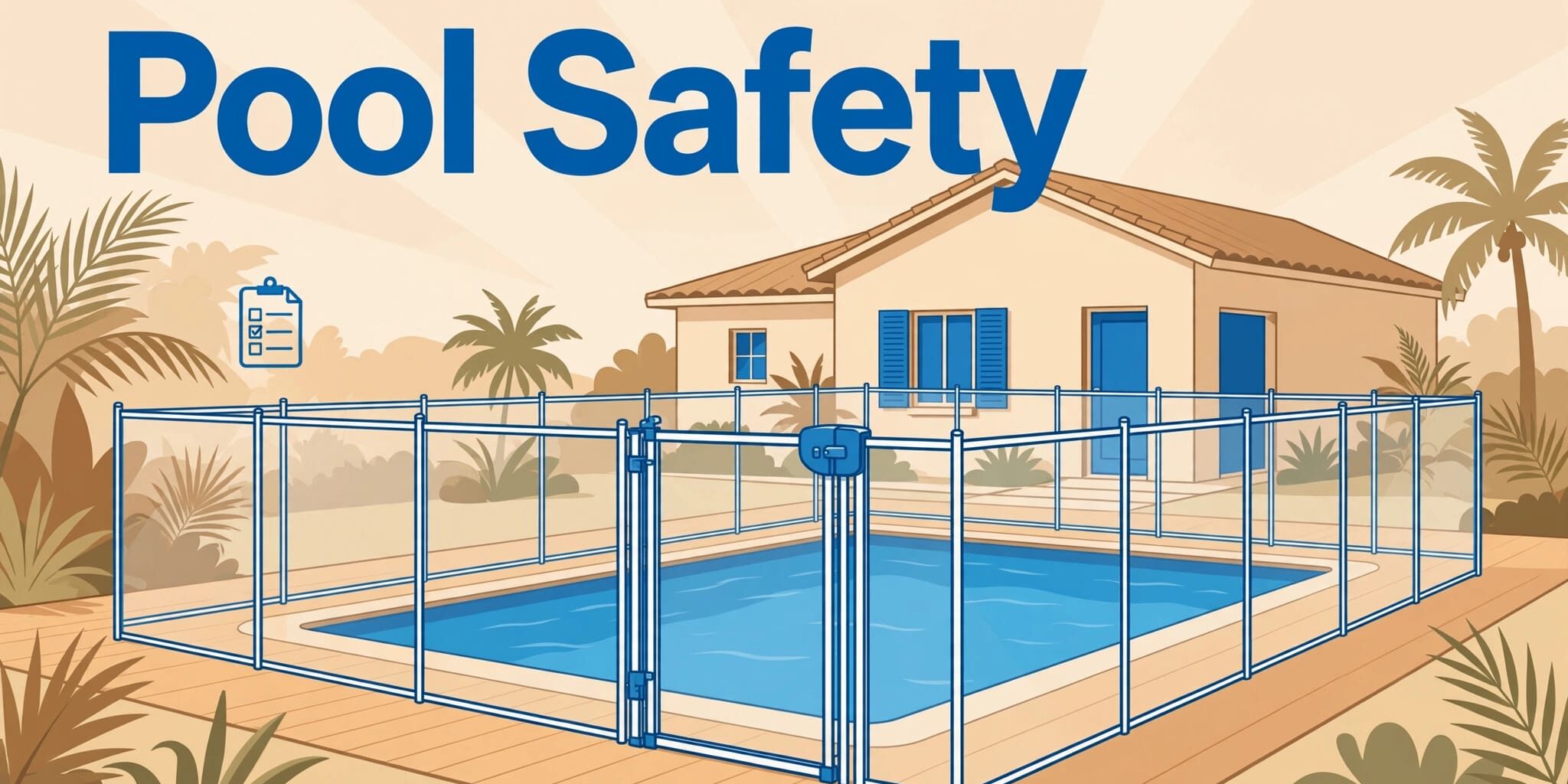
A compliant safety barrier separates the water from normal backyard activity. It helps protect children, pets, guests, and the home itself.
The right setup brings real peace of mind and can help homeowners document responsible risk management. Insurance underwriting rules, exclusions, and required endorsements remain separate matters.
Key Takeaways
- Florida pool safety barriers create an isolation zone around the water, but legal compliance does not guarantee insurance coverage, renewal, or a lower premium.
- A strong setup separates the pool from the home and yard with a four-sided barrier, a self-closing and self-latching gate, and no nearby climbing objects.
- Removable mesh fences, pool covers, alarms, and other safety features serve different purposes and are not automatically interchangeable under Florida law or insurance requirements.
- Homeowners should confirm current state and local rules, obtain any required permits and inspections, and keep photos, product records, approvals, and maintenance documentation.
- Regular gate testing, barrier maintenance, and active adult supervision remain essential because no single safety feature eliminates every pool risk.
Why Florida Pool Safety Barriers Matter to Home Insurance
Home insurance carriers often look closely at pools. They may ask about fencing, gates, diving boards, slides, alarms, and liability limits.
Florida pool fence law sets a legal baseline, but compliance doesn’t guarantee coverage, renewal, or a particular premium.
Meeting that legal baseline doesn’t guarantee coverage. Legal barrier requirements and carrier-specific documentation requests aren’t interchangeable.
Insurers often want clear pool details
Insurers may ask about fencing, gates, alarms, a pool safety cover, and supervision because accidental drowning is a serious pool risk. That cover may support drowning prevention; it doesn’t automatically satisfy every Florida code provision or carrier’s underwriting requirements.
Clear photos can help answer those questions fast. Homeowners should keep photos of the completed barrier, gate, and pool area, plus inspection records.
A homeowner should also report major pool changes promptly. That includes a new pool, removed fence, new diving board, or added spa.
Safety features support responsible ownership
A pool injury involving residents, guests, children, or trespassers can raise premises liability questions. Homeowners should discuss those risks with an insurance professional.
A pool accident can create painful consequences for everyone involved. Insurance may help with covered claims, but prevention always comes first.
The CDC reports an 83 percent reduction in a child’s drowning risk with a four-sided isolation fence. The comparison is with a three-sided property-line fence. Its drowning risk guidance also stresses separating the pool from the house and yard. This layered approach matters because no single barrier eliminates every risk.
A backyard fence around the property is not always a pool barrier. The pool needs its own protected space.
Florida Pool Safety Barriers: What State Rules Require
Florida’s Residential Swimming Pool Safety Act, Chapter 515, provides the statewide starting point for Florida pool fence law. Local building departments may apply stricter rules, and current Florida Building Code provisions can add details. Homeowners should check permit and inspection requirements before installation.
The current Florida pool safety statutes provide the authoritative Chapter 515 text in the Florida Statutes. They define a barrier as a fence, wall, or combination that surrounds the pool. Together, these rules establish basic pool barrier requirements, subject to current code and local interpretation.
The barrier must block easy access
Florida pool fence requirements commonly cite a four-foot minimum height on the outside and four-inch maximum openings. Gate placement and operation also matter. Check these points against the current code and local inspection requirements, since they aren’t a complete legal checklist.
These pool barrier requirements address the pool perimeter, separation from the home, and resistance to climbing, crawling, or squeezing through. The barrier should block access from the home or yard.
It should sit far enough from the water. A child who gets past it shouldn’t immediately fall into the pool. A property-line fence isn’t automatically an isolation barrier.
Permanent furniture, planters, grills, and storage boxes can create climbing opportunities. Homeowners should move those items away from the fence line.
Florida allows several safety-feature options
For final inspection of a new residential pool, Florida requires at least one approved option from its listed pool safety features. A compliant barrier is one option.
Other options may include an approved safety pool cover, exit alarms, self-closing and self-latching home-access doors, or pool alarms. The exact application depends on the current statute and code.
Homeowners may also consider a pool safety net, but a net isn’t automatically an approved statutory substitute. These pool safety products, including covers, nets, alarms, and barriers, aren’t interchangeable for legal or insurance purposes.
Homeowners should confirm the current statutory text, permit requirements, inspection requirements, and local interpretation before relying on any feature.
Florida pool fence law also treats noncompliance seriously under Chapter 515. Under Section 515.27, failing to equip a new residential pool with a required feature can lead to a second-degree misdemeanor.
The section describes a 45-day correction period after an arrest, summons, or notice to appear, subject to its stated conditions. That provision doesn’t apply identically to every violation or enforcement circumstance. Where applicable, the person must correct the violation and complete the required education program.
Why a Removable Mesh Pool Fence Fits Many Homes
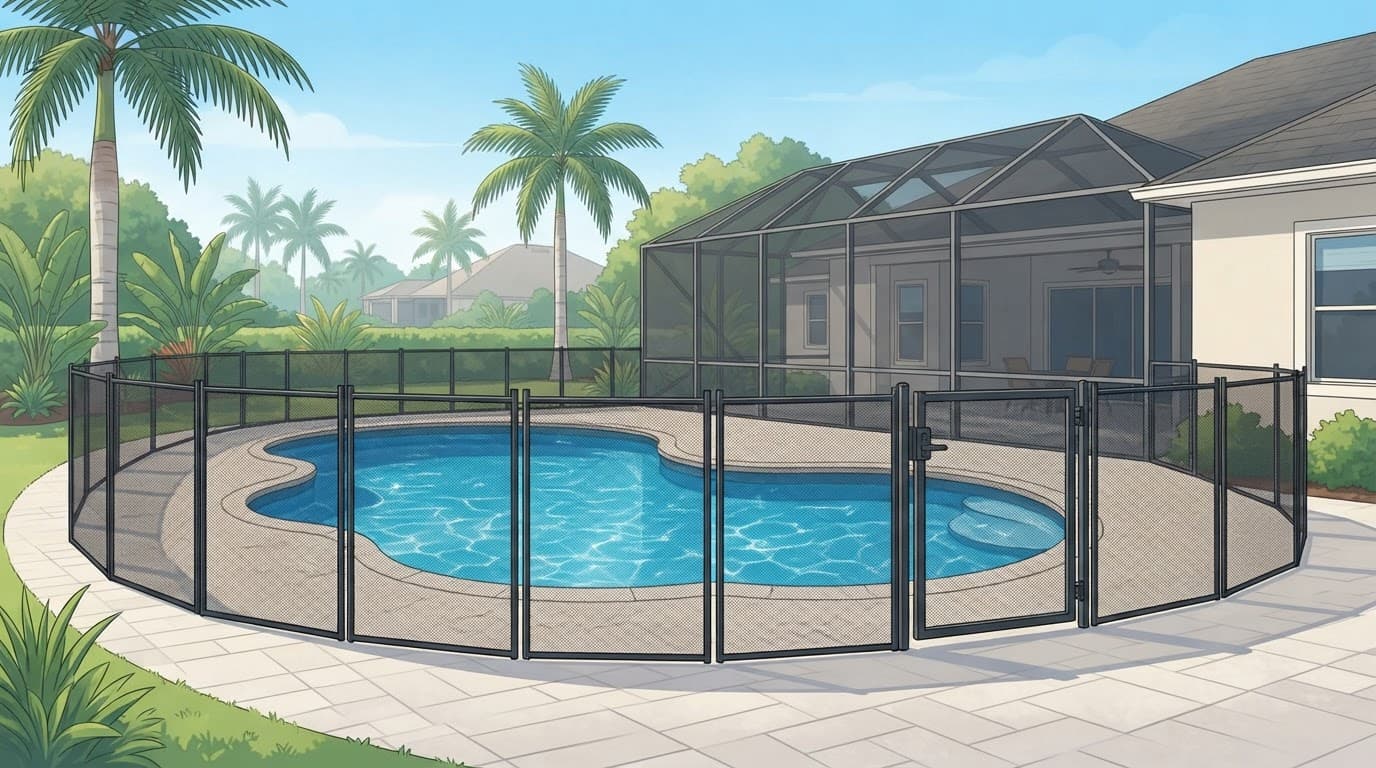
A removable pool safety fence gives families a clear barrier without a bulky structure or closed-off backyard view. A pool safety fence creates an isolation zone around the water while preserving visibility.
Pool fence installation depends on more than the material selected. Accurate layout, height, spacing, anchoring, gate hardware, and required inspection help determine whether a mesh barrier may comply when installed and approved under applicable Florida code.
Mesh fencing keeps the pool visible
Parents and caregivers can still see the water through the mesh. That visibility keeps the backyard feeling open while the barrier creates a physical stop.
A quality mesh pool fence can handle Florida sun, rain, humidity, and pool splash. It can come down when adults need full patio access, then go back up afterward.
That flexibility helps during parties, pool maintenance, and visits from grandchildren. Still, the fence should remain installed whenever children or pets have access to the yard.
Compare the main safety options
Each option serves a different purpose. Homeowners should choose features that fit the property and family routine.
| Safety option | What it does | What it doesn’t do | Active adult response |
|---|---|---|---|
| Removable mesh barrier | Separates the pool from the yard and keeps views open | Doesn’t eliminate the need for supervision or secure gate use | Yes, supervise children and pets |
| Pool safety cover | Covers the water when the pool isn’t in use | Must stay secured and doesn’t replace supervision. An ASTM certified label alone doesn’t prove legal compliance. Request documentation showing testing to the applicable ASTM standard, then verify current Florida and local requirements. | Yes, secure the cover and supervise |
| Door or window alarms | Alerts adults when someone exits toward the pool | Doesn’t stop someone from reaching the water | Yes, respond immediately |
| Pool alarm | Alerts adults after water entry | Doesn’t prevent entry | Yes, respond immediately |
A mesh barrier and active adult supervision work well together. The barrier creates a physical stop, but it can’t replace supervision.
Consult the local building department for current requirements, and ask a properly qualified professional to review the design if needed.
Pool Gates Need Extra Attention
A pool gate gets used more than any other part of the barrier. It needs to work right every single time.
Under Florida pool fence law, the applicable statute and Florida Building Code address gate operation. Local officials may apply additional details, so confirm measurements and hardware with the local building department or inspector.
Depending on the code, a gate may need to open outward, away from the pool, and be self-closing and self-latching.
A reliable latch matters every day
The latch release should sit where a young child cannot reach it over the gate or through openings. The gate should close and latch without manual assistance.
Homeowners should test the gate after installation. They should retest it after storms, landscaping changes, or heavy use.
A gate that sticks, drags, or stays open needs repair right away. That small problem can remove the barrier’s protection in seconds.
Layout can make a good fence safer
The strongest pool fence surrounds all four sides of the pool area. This layout meets key barrier requirements by separating the water from patio doors, play areas, and the rest of the yard.
A clear walking path helps adults use the gate every time. Climbing objects should stay well away from the mesh.
Research reviewed by the National Institutes of Health supports four-sided isolation fencing with a secure, functioning gate. The pool-fencing evidence review found that four-sided fencing offers greater protection than property-line fencing alone. Active adult supervision remains essential to drowning prevention.
Permits, Local Rules, and Proof for Insurers
Florida pool fence law begins with the Residential Swimming Pool Safety Act, the statewide statutory baseline. State law is the floor, not always the final answer.
Counties and cities may add pool barrier requirements for permits, inspections, placement, and documentation. Confirm the current Florida Building Code and applicable local building codes before work begins.
Miami-Dade County points homeowners to Florida Building Code pool-barrier sections during permit review. Hillsborough County homeowners should check county and city pool fence requirements before scheduling work.
Start with the local building department
A homeowner should ask the local building department whether the project needs a permit. The answer can depend on fence location, pool type, property lines, and local review.
Homeowners should request written measurements, product specifications, installation records, and permit-related information from any pool fence company they hire.
Gate placement, deck material, screen enclosures, and unusual yard shapes can affect the final plan. A licensed professional can help confirm the site details before work begins.
Clear plans help avoid expensive changes later. They also give the homeowner better records for the insurer.
Keep a simple safety file
Homeowners should save permits, inspection approvals, invoices, installation photos, product documentation, and gate-maintenance records. They can also keep the relevant Florida Statutes citation and records of later changes to the barrier or pool area.
These records can help answer insurer questions during renewal or inspection, but they don’t guarantee coverage. Keep them available for a future home sale or insurance review.
For a Southwest Florida property, contact the local building department or permitting office about current requirements. Direct coverage questions to the insurer, and consult a licensed professional when the site is unusual.
Maintain the Barrier After Installation
Florida weather can test any backyard equipment. Heavy rain, strong wind, shifting pavers, and active kids can affect a fence over time.
A quick monthly check can catch small issues early and help maintain compliance with Florida pool fence law.
Check these areas regularly
- Test the gate’s self-closing action and latch every month.
- Look for loose sections, damaged mesh, or shifted support points.
- Move chairs, toys, pots, and grills away from the barrier.
- Check that landscaping doesn’t create a climbable path.
- Remove leaves and debris near the gate and fence line.
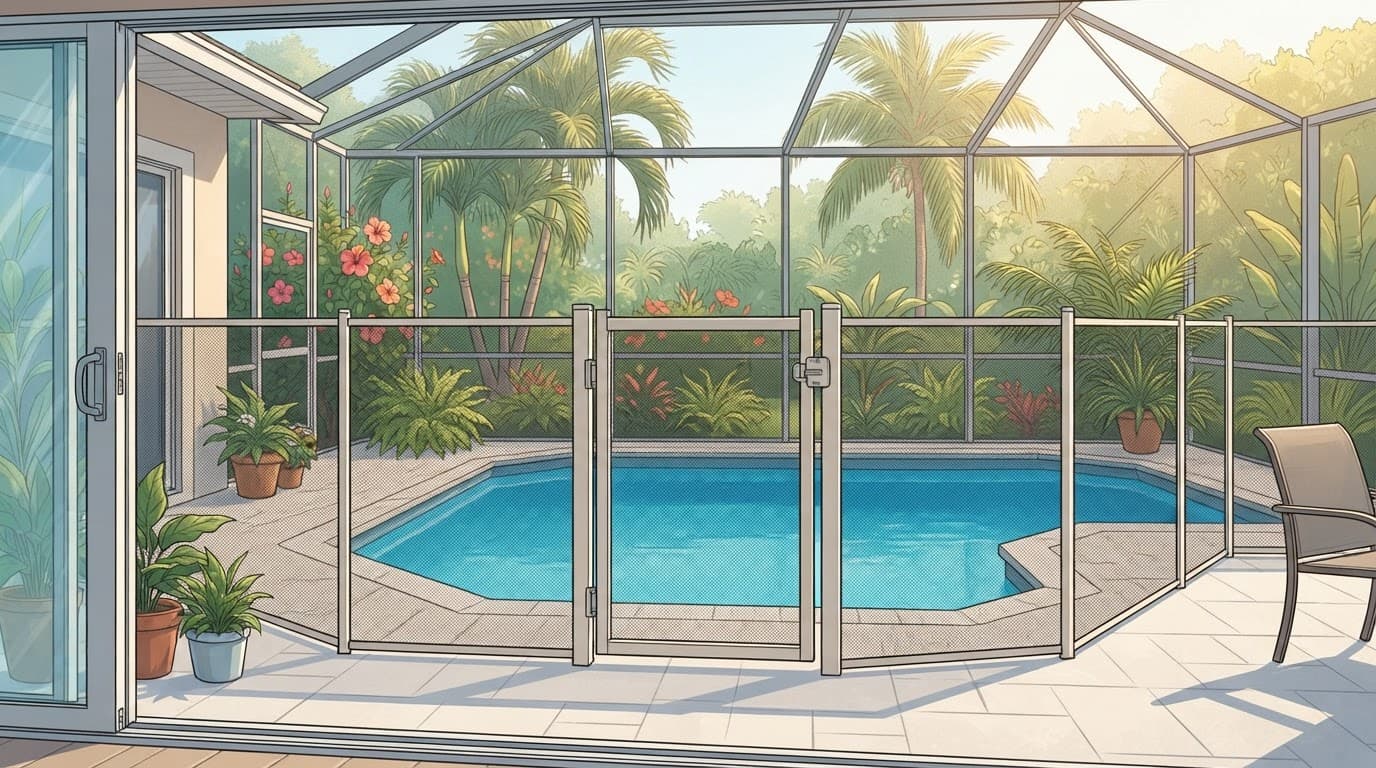
A pool fence works best when it becomes part of the household routine, but maintenance never replaces active adult supervision. Adults should close the gate behind them every time.
Frequently Asked Questions
Does Florida law require a pool safety barrier?
Florida’s Residential Swimming Pool Safety Act, Chapter 515, provides the statewide starting point for residential pool safety requirements. Common requirements address barrier height, opening size, gate operation, and approved safety features, but homeowners should confirm the current Florida Building Code and local rules.
Is a property-line fence enough to protect a Florida pool?
Not necessarily. A pool barrier should create a separate, four-sided protected area around the water rather than simply surround the property, and it should block access from the home and yard.
Can a removable mesh fence comply with Florida pool requirements?
A removable mesh barrier may be an approved option when its layout, height, spacing, anchoring, gate, installation, and inspection meet applicable requirements. Homeowners should confirm the design with the local building department before relying on it for legal compliance or insurance documentation.
Does a compliant pool barrier guarantee home insurance coverage?
No. A compliant barrier supports responsible risk management, but insurers may have separate underwriting rules, documentation requests, exclusions, or endorsement requirements.
What records should homeowners keep for a pool safety barrier?
Keep permits, inspection approvals, invoices, product specifications, installation photos, and gate-maintenance records. Report major pool or barrier changes to the insurer and retain the file for future renewals, inspections, or a home sale.
A Safer Pool Area Starts With One Clear Barrier
A compliant pool setup helps protect more than the water. It supports safer everyday moments when adults get distracted, guests arrive, or a child moves faster than expected.
The strongest approach combines an isolation barrier, a dependable gate, regular maintenance, close supervision, and an appropriate home insurance review. Together, these steps can provide greater peace of mind without replacing coverage or insurer requirements.
Questions or ready to get started? Call us at (941) 500-9484.