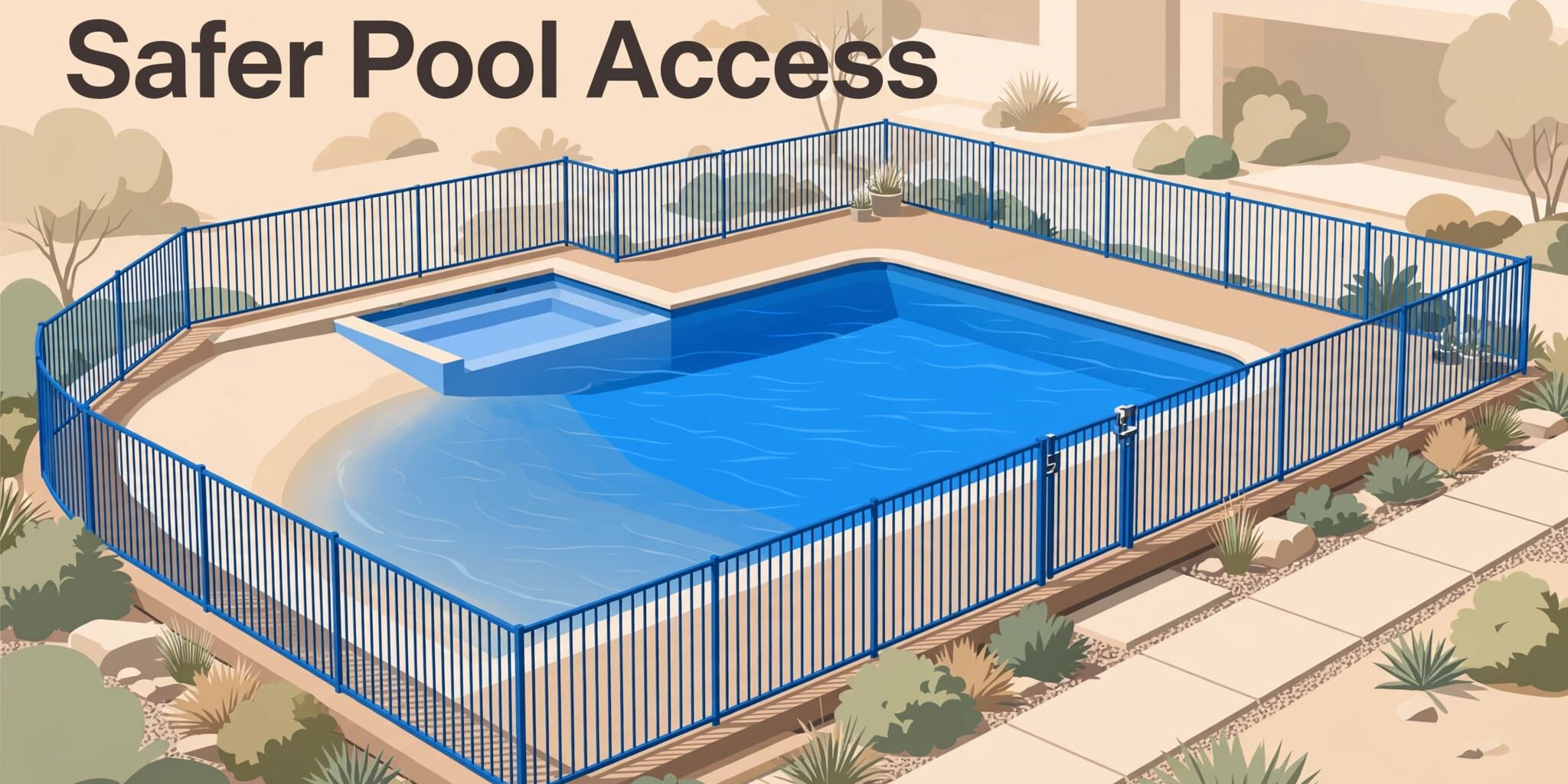
A beach-entry pool looks relaxed and welcoming, but its broad shallow edge changes how people use the backyard space. The water begins where kids, pets, and guests naturally want to walk.
A zero-entry pool barrier gives homeowners a clear boundary around that open access point. It keeps the pool area separate without closing off the backyard view.
Good planning for a zero-entry pool starts before pool installation, when its shape, deck, and gate locations become permanent.
Key Takeaways
- A zero-entry pool barrier must surround the entire pool, including the gradual shallow entrance, tanning ledge, and bench areas.
- Plan the four-sided barrier, gate locations, walking paths, and deck transitions before pool installation and deck work begin.
- Use a self-closing, self-latching gate that swings away from the pool, while confirming height, opening, climb-resistance, and bottom-gap requirements with local authorities.
- Gunite pools offer the most flexibility for custom beach-entry designs, while fiberglass pools provide faster installation with a fixed shape; vinyl liner pools are usually a poor fit for true zero-entry layouts.
- Barrier fencing works best as one layer of protection alongside active supervision, door alarms, pool covers, and swim lessons.
A Zero-Entry Pool Barrier Starts With the Footprint
A traditional pool often has one clear shallow end. A zero-entry pool has a long, gradual walk-in area. That slope can take up far more deck and yard space.
The barrier must surround the entire water area, including the gradual entrance of a beach-entry pool, not only the deeper section. It should meet the pool edge at the correct deck level, or the broad shallow section can feel like part of the patio.
A shallow entrance reaches farther than expected
Beach-entry pools often include a tanning ledge, bench seating, or shallow play space. A tanning ledge and bench seating can make the wading area especially inviting on a warm Florida afternoon.
These features widen the protected wading area and extend the water boundary that needs coverage. Homeowners should mark the fence path early, before pavers, landscaping, and furniture fill the space.
A removable mesh pool fence can follow curves and custom pool shapes around a zero-entry pool. It gives the pool its own protected zone while keeping sightlines open.
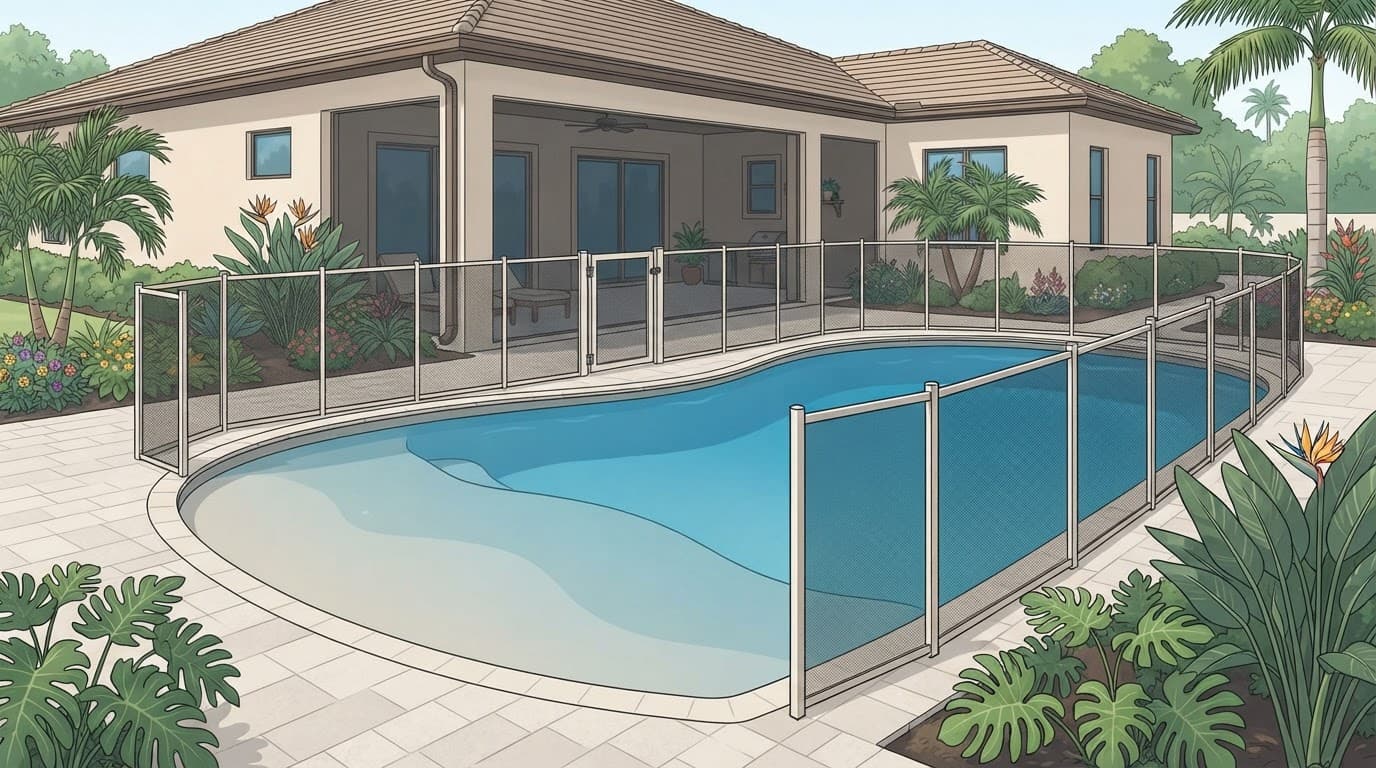
Build type can also affect the barrier route. A fiberglass pool has fixed shell dimensions, while a vinyl liner may restrict some curves or transitions. Confirm the final fiberglass pool layout before setting the barrier path.
The entry slope affects pool size
The International Swimming Pool and Spa Code limits residential beach-entry slopes to 1:7, but homeowners should confirm current requirements with the applicable authority. That slope ratio means every inch of vertical drop needs seven inches of horizontal run.
A gentle slope needs room. For example, a 24-inch water depth needs at least 14 feet of horizontal space at that ratio.
That space affects the pool’s footprint, deck width, drainage systems, and barrier route. A rushed layout can leave a narrow walkway or awkward gate location.
The shallowest water still needs the same controlled access as the deepest water.
Put a Four-Sided Fence Between the Home and Water
A backyard property-line fence may keep neighbors out. It does not always keep a child away from the pool.
A four-sided barrier works best when it creates a separate layer around the water. The house, lanai, lawn, and pool should not feel like one open area.
Why pool isolation matters
The CDC recommends a four-sided pool fence that fully encloses the swimming pool and stands at least four feet high. This type of barrier separates the water from the home and yard.
That separation matters most during everyday moments. A door opens. Someone answers a phone. A pet slips outside. These are ordinary moments, but pools demand more than ordinary caution.
A transparent, non-metal safety mesh barrier preserves visibility while keeping access controlled. The pool sits behind a gate, so access takes an adult decision.
Gates deserve the closest attention
Every barrier needs a safe way in and out. A self-closing, self-latching gate should swing away from the pool.
The CPSC’s residential barrier guidance also addresses opening sizes, climb resistance, and bottom gaps. Homeowners may search for a “no holes pool fence,” but that phrase does not replace code compliance.
Any selected barrier must still meet requirements for opening sizes, climb resistance, height, gates, and bottom gaps. Local building rules can add requirements, so homeowners should check their county and permit office.
The best gate location feels natural. It should sit near the main patio route, not across the yard or behind outdoor furniture.
Choose the Pool Build With the Barrier Plan in Mind
The pool material affects the entry shape, construction schedule, and final barrier layout. Homeowners should decide how much customization they need before selecting a shell or finish.
Gunite and fiberglass work well for different reasons. Vinyl liner pools usually create more concerns with beach-entry designs.
Gunite allows a custom beach entry
Gunite pools let builders shape a gradual slope around trees, patios, water features, and unusual lots. They can add wide tanning ledges, curved edges, bench seating, and deep swim zones.
That flexibility comes with more time and cost. In Southwest Florida, basic gunite pools often start around $50,000 to $65,000 before larger decks, features, and upgrades.
Construction commonly takes eight to 16 weeks from excavation through filling. Permits, weather, finishes, and inspections can extend that schedule.
Fiberglass offers a faster fixed shape
A fiberglass pool arrives as a manufactured shell. Some models include tanning ledges, swim-outs, and shallow entry features.
Installation often takes two to five weeks after excavation begins. Basic fiberglass projects in Southwest Florida often start around $45,000 to $55,000.
However, the shape is fixed. Homeowners should confirm the barrier path around the shell before choosing it.
| Pool type | Best fit | Typical build timing |
|---|---|---|
| Gunite | Custom slopes and larger layouts | About 8 to 16 weeks |
| Fiberglass | Faster installation and set shapes | About 2 to 5 weeks |
| Vinyl liner | Standard pool layouts | Usually a poor fit for beach entries |
Vinyl liners can wrinkle, shift, and become slippery over a long sloped entrance. That makes them less appealing for a true zero-entry pool.
Plan the Pool Fence Route Before Deck Work Begins
The barrier should never feel like an afterthought. When homeowners wait until decking finishes, they may lose the best layout options.
The route needs enough room for walking, cleaning, gate use, and furniture. It also needs to make sense every day.
Leave room around the pool edge
Place the barrier far enough from the water for cleaning and comfortable gate access. A tight route can also make the gate approach harder to use.
Coordinate the route with the finished pool edge before deck work starts. A removable safety mesh barrier can follow gentle curves while preserving visibility. That safety mesh keeps the shallow edge visible from the home.
Homeowners should think through common routines before marking the layout:
- Carrying towels, toys, and pool supplies through the gate.
- Reaching skimmer baskets and equipment without squeezing past furniture.
- Giving adults a clear view of the wading area from the home.
- Leaving patio space outside the barrier for chairs, bench seating, and grills.
The wading area should remain visible and easy to reach, while a well-placed removable barrier keeps the space clean and organized. It protects the pool without taking over the patio.
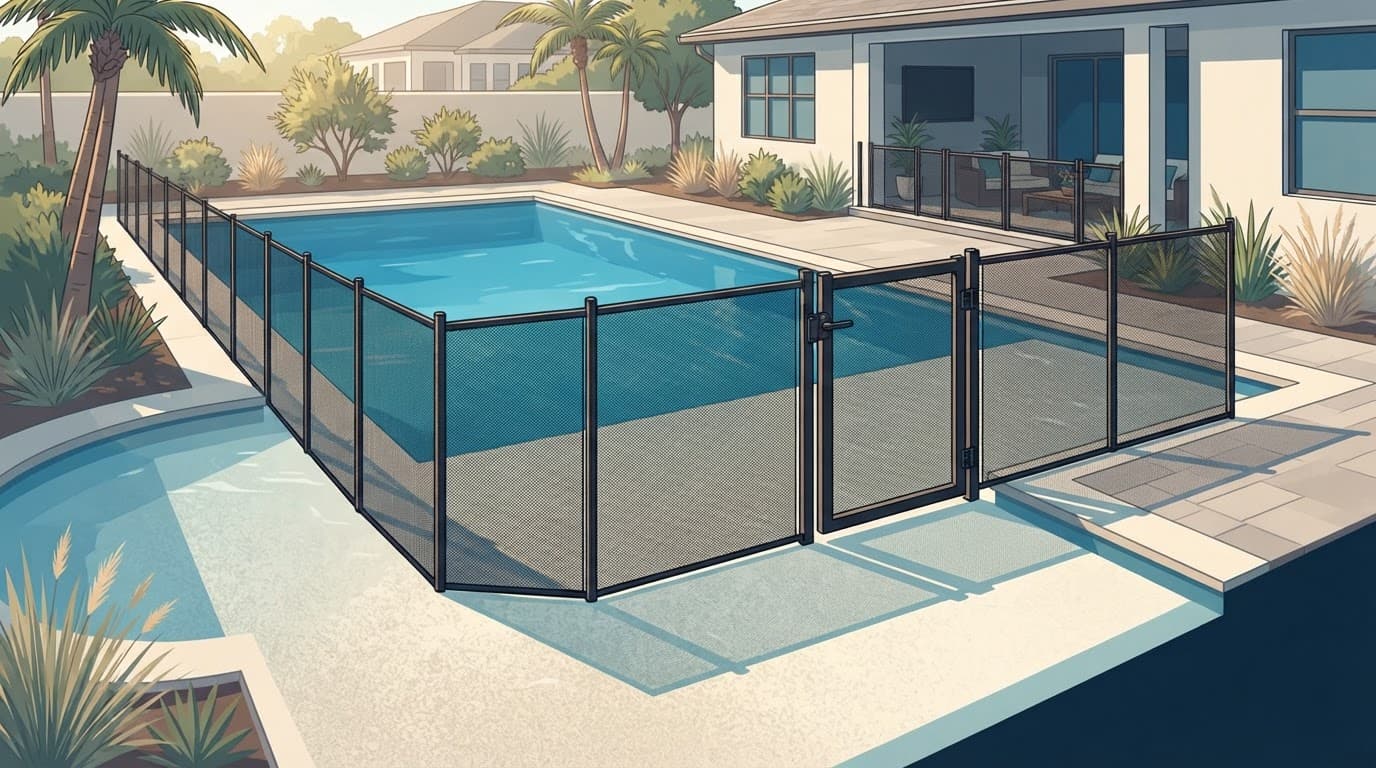
Keep gate approaches clear
A gate should not hide behind a chaise lounge, planter, or grill. Adults need to reach it quickly with both hands free.
Create a clear, stable transition at deck level near the gate. Keep the path to the latch open and easy to reach.
Keep the latch area clear, with the child-resistant latch out of a child’s reach. The gate’s self-closing action should shut it each time someone lets go.
Some shoppers use “no holes pool fence” as a product-search term, but local code requirements control allowable openings. The CPSC barrier guide gives useful details about self-closing, self-latching gates and opening limits for busy family patios.
Treat the Shallow Entry Like Its Own Maintenance Zone
Shallow water in a zero-entry pool warms quickly.
That warmth can speed buildup in a beach-entry pool. Windblown leaves, grass, sunscreen, and fine debris can collect in the wading area.
The shallow section can look dirty faster than deeper water, so regular care keeps it inviting and easier to supervise. A clean floor and a non-slip surface support safer footing, but maintenance can’t guarantee slip prevention.
Watch for algae and debris buildup
Algae likes warm, shallow, sunny water. The gradual slope can also hold dirt where the pool floor changes direction.
Homeowners should brush the wading area often. They should also check circulation through the wading area, chlorine levels, and filter performance on a regular schedule.
A robotic cleaner may miss the flattest part of the shallow entry. A manual brush handles those spots better.
Safety layers still work together
A pool barrier is one important layer. It supplements, rather than replaces, adult supervision, door alarms, pool covers, and swim lessons.
The CDC reports that four-sided isolation fencing can reduce a child’s drowning risk by 83% compared with three-sided property-line fencing. That supports separating the pool from the house.
Families should also set simple pool rules. The gate stays closed. Children never enter alone. Adults stay close to the wading area during swim time.
Budget for the Barrier at the Beginning
Pool budgets often focus on the shell, finish, and pavers. Water features can also affect layout and pricing, so barrier measurements belong in the initial pool installation estimate.
A fiberglass pool with a custom beach-entry shape may need more barrier footage than a compact rectangle. A vinyl liner pool may produce a different estimate when the entry shape or deck plan changes. The final fiberglass pool estimate can also change with curves, gates, and equipment access.
Homeowners should request pool fence measurements before deck work starts. They should also ask how removable safety mesh will handle curves, wide walkways, gate locations, and the shallow pool entrance.
Pool Fence of SWFL can help homeowners map safe access points and practical gate placement. A broad wading area may require additional barrier footage around the shallow entrance. They can contact Pool Fence SWFL for a free estimate to review the plan before the backyard layout gets locked in.
Once the safety plan is outlined, homeowners can compare options and pricing with Get a FREE Quote.
Frequently Asked Questions
Does a zero-entry pool need a barrier around the shallow entrance?
Yes. The barrier should enclose the entire water area, including the gradual entry, tanning ledge, and other shallow features. The shallowest water still requires controlled access.
How high should a zero-entry pool barrier be?
The CDC recommends a four-sided pool fence that is at least four feet high. Homeowners should also confirm local requirements for openings, climb resistance, gates, and bottom gaps before installation.
What type of gate should a pool barrier have?
A pool barrier should have a self-closing, self-latching gate that swings away from the pool. Keep the approach and latch area clear of furniture, planters, and other obstructions.
When should the barrier route be planned?
Plan the barrier route before pool installation, paving, landscaping, and furniture placement. Early planning leaves room for cleaning, comfortable gate access, equipment maintenance, and clear views of the shallow area.
Does pool construction material affect the barrier layout?
Yes. Gunite allows custom slopes and curves, while fiberglass pools have fixed shell dimensions that should be confirmed before setting the barrier path. Vinyl liner pools are generally less suitable for long, sloped beach-entry designs.
A Safer Way to Enjoy an Open Pool Design
A resort-style pool can feel like a private retreat, but its open edge needs a thoughtful safety plan. Protect the entire shallow entrance and keep access controlled through simple gates. Clear visibility also supports active supervision.
A well-planned zero-entry pool barrier gives homeowners more than a polished backyard. It creates safer space for loved ones while leaving room for everyday family routines.
Questions or ready to get started? Call us at (941) 500-9484