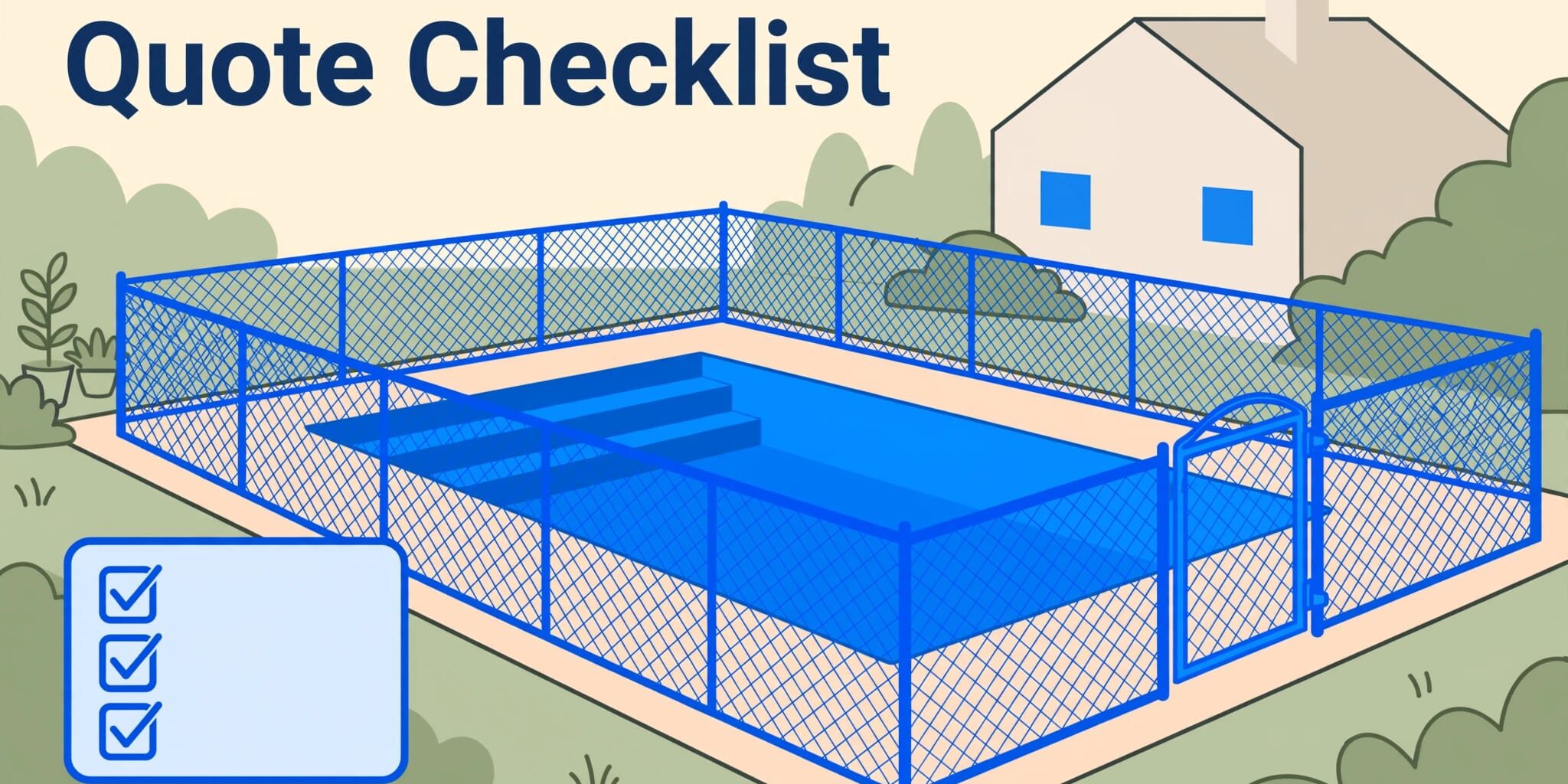
A written quote should explain the pool fence cost by itemizing fencing, gates, anchoring, labor, permits, site preparation, and taxes. It should also include a layout showing exactly where the barrier will stand.
A clear price feels reassuring because the full scope appears in writing. The pool fence installation cost should cover the complete route and installation, including the gate and deck work.
Key Takeaways
- Compare quotes using the same fence route, height, gate count, and installation scope.
- Require written details for sleeves, drilling, cleanup, permit responsibilities, and warranty coverage.
- Separate the project subtotal from taxes, allowances, and work that carries additional charges.
A low headline price helps only when homeowners understand everything it includes.
How Much Does Removable Mesh Pool Fencing Cost?
Published prices provide a useful starting budget for pool fence cost. However, they aren’t interchangeable with a written estimate for a particular backyard.
Installed totals and per-foot prices
Katchakid lists removable mesh installations at $2,000 to $5,000 before tax. That includes a self-closing, self-latching, key-lockable gate.
PoolGuard reports broader pool fence installation costs of $1,500 to $10,000, with most homeowners spending around $4,000.
For a mesh pool fence, Premier Pool Fence Orlando lists $15 to $30 per linear foot. PoolGuard lists $19 to $32 per linear foot.
For a fair cost per foot comparison, check whether the quote includes labor, drilling, sleeves, and gate installation. It should also identify the fence material. A tempered glass quote has a different scope from mesh pricing. Without those details, homeowners can’t compare the figures fairly.
Gate, height, and finish pricing
PoolGuard lists self-closing gate assemblies at $200 to $900. Meanwhile, Premier lists gates with self-locking features at $200 to $600.
For residential pool fences, fence height is usually 4 or 5 feet. Katchakid offers both heights.
Poolfence.com lists 42-, 48-, and 60-inch options, with 48 inches its most popular. Product availability doesn’t establish local approval.
Finish charges also need clear wording. Katchakid states that Sheer Black, Sable, and Oakmont finishes cost the same.
What the Written Installation Scope Should Include

A useful removable pool fence installation quote describes the finished barrier, not just the amount of mesh.
Layout and product specifications
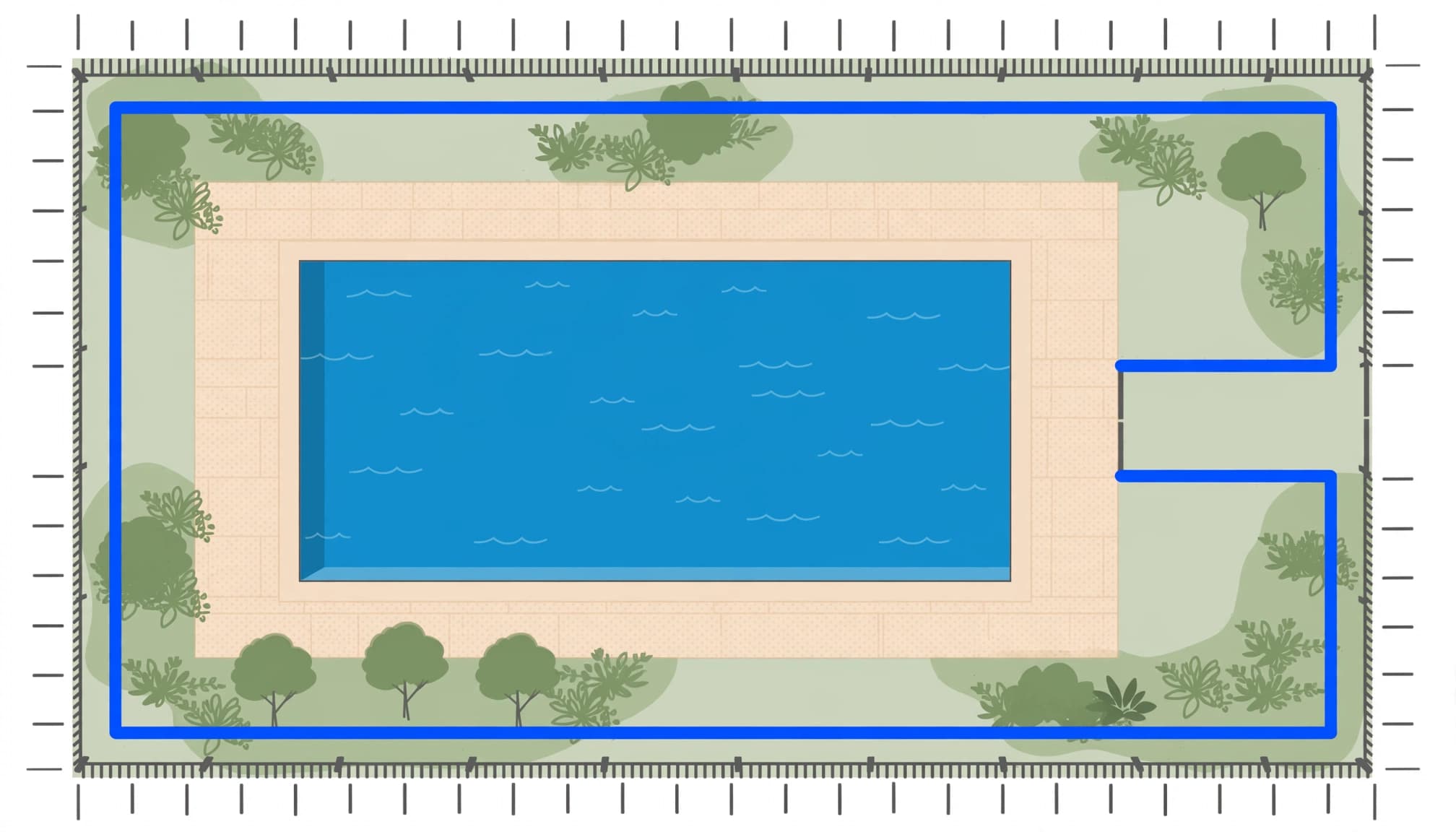
The drawing should identify each run, corner, endpoint, and pool gate location. It should also show connections to existing structures.
An A-to-B route uses suitable existing structures and typically needs 40 to 60 feet of fencing plus a gate. An isolation pool fence surrounds the pool and commonly needs 90 to 120 feet.
The product description should name the fence system, panel height, mesh color, fence material, pole construction, and gate hardware. It should also identify any custom sections.
Because mesh fencing relies on tension, the scope should describe the route and anchoring details.
Anchoring, labor, and handover
The estimate should include deck drilling, sleeves, poles, connectors, and caps for empty sleeve openings. Pavers or other surfaces may need additional support, depending on ground conditions.
Labor should cover installation, tension adjustment, gate alignment, and cleanup. The handover should include a demonstration of removal and reinstallation.
Warranty wording should distinguish manufacturer coverage from installation workmanship. Written terms should list exclusions and explain who handles service requests.
The quote should also state whether follow-up adjustments cost extra.
How to Measure the Fence Route
The planned fence route determines footage. It may differ from the pool perimeter or waterline measurement.
Measure each run separately
A measuring plan starts at the proposed gate and follows the complete enclosure route. Record the measurement for each straight run.
For curves, string can follow the proposed fence line. Measuring the string gives a better starting estimate than guessing around rounded corners.
The layout should record steps, equipment, planters, surface changes, and elevation changes. Allow space for the gate swing, too.
A shorter route doesn’t always create a simpler installation, especially around obstacles or difficult anchoring surfaces.
Use perimeter formulas carefully
For a rectangle, perimeter equals 2 × (length + width). A 20-by-40-foot rectangle therefore measures 120 feet around.
However, a 20-by-40-foot pool doesn’t automatically need exactly 120 feet of fencing. The fence route sits away from the water.
Rough planning guides allow 2 to 3 feet per gate location and 5% to 10% extra footage. The final drawing should count each gate opening once.
Labor, Preparation, and Optional Extras
These charges deserve separate lines when the base installation price doesn’t include them.
Labor and site preparation
The estimate should itemize labor costs separately when the base installation price doesn’t include them.
PoolGuard lists labor costs at $30 to $80 per hour. Difficult ground conditions and preparation can push labor toward 50% of the total.
Its published site-preparation ranges provide planning context.
| Preparation work | Published range |
|---|---|
| Tree and shrub removal | $150 to $500 |
| Grading and leveling | $500 to $5,000 |
| Existing barrier demolition | $200 to $1,000 |
These aren’t automatic charges. A written estimate should identify the work the property actually needs.
Deck repairs, additional supports, and restricted access also deserve written pricing when they affect installation.
Custom layouts and alarms
Premier reports that custom design can add 10% to 20%. Complex pool shapes can increase labor by 10% to 15%.
The quote should explain any complexity allowance rather than applying an unexplained percentage.
PoolGuard lists surface-wave alarms at $100 to $220. Door or gate alarms generally cost $40 to $80.
For each pool alarm, the quote should state whether installation comes with the device. Alarms add protection, but they don’t replace the barrier or adult supervision.
A Worked Breakdown Using Published Standard Prices
Published standard options show how separate installation components add together.
Pool Fence Express costs $895 for up to three sections and 45 linear feet with standard installation. A premium self-closing, key-lock gate costs $550 with standard installation.
The arithmetic below combines those stated prices.
| Component | Published price |
|---|---|
| Pool Fence Express standard installation | $895 |
| Premium self-closing, key-lock gate with standard installation | $550 |
| Combined component subtotal | $1,445 |
That subtotal isn’t a complete property-specific quote. It doesn’t establish taxes, permit charges, unusual anchoring work, or additional footage.
A finished estimate should place those items beneath the subtotal. Each should show a fixed amount, an allowance, or a clear statement that it doesn’t apply.
The gate opening also needs clear treatment within the layout’s footage. It shouldn’t appear twice in the material calculation.
Finally, the document should show the final payable total, deposit, remaining balance, and quote expiration date. Any additional work needs written approval before it changes the agreed price.
Permits and Gate Safety Belong in the Quote
Florida’s residential pool safety statutes address safety-feature options and barrier requirements. A product’s advertised height alone doesn’t establish compliance with building codes or local barrier rules.
A pool safety net is a separate safety product, not a substitute for applicable barrier requirements.
The quote should list local permit requirements, who submits the application, and who handles any required inspection.
PoolGuard lists permit fees at $40 to $150. Premier lists $50 to $200.
These are general ranges, not a Southwest Florida fee schedule. Skipping a required permit can bring fines, stop-work orders, or forced removal.
A self-latching gate should swing outward, away from the pool, and have self-closing hinges. A standard exposed latch should sit at least 54 inches above ground.
The CPSC’s residential pool barrier guidelines also explain protected-release arrangements.
HOA appearance rules and insurance requirements belong in the planning stage. Neither replaces applicable building requirements.
How to Compare Two Quotes Fairly
Two totals mean little when the proposed installations differ. First, make sure the drawings show matching routes and gate locations.
Next, compare panel height, hardware, anchoring, and included labor. A quote for mesh fencing needs a separate scope comparison from one for tempered glass. A quote with one gate doesn’t match a quote with two.
Check allowances for surface-related work. Ground conditions can affect drilling and anchoring costs, so compare fixed prices with open-ended charges for difficult surfaces.
Manufacturer warranties and workmanship coverage should appear separately. Cleanup and any required return visit should also have clear terms.
For property-specific planning, homeowners can schedule a free estimate with a layout showing access points and deck conditions.
An item marked “allowance” can change the final bill; an included fixed-price item should define its limits.
Frequently Asked Questions
Can homeowners install removable mesh fencing themselves?
DIY systems exist, and straightforward installations may suit homeowners with suitable tools and sound concrete.
However, drilling accuracy affects pole alignment, mesh tension, and gate operation. Pavers, slopes, curves, and uncertain deck support warrant professional assessment.
A professional installation quote should include those conditions rather than treating every surface as standard concrete.
Does removable fencing avoid permanent deck changes?
Usually, no. Installers drill holes and fit sleeves that receive the removable poles.
The panels lift out, but the sleeves remain. Caps help keep debris out of unused openings.
Therefore, the quote should describe both the removable components and the permanent deck work.
What should happen after removal or reinstallation?
The installer should demonstrate safe removal, storage, and reconnection. Children need another effective access barrier whenever sections come down.
After reinstallation, adults should inspect tension, connections, and gate operation. The gate must close and latch without assistance.
A Clear Quote Makes the Decision Easier
The strongest removable pool fence installation quote connects the price to a complete, clearly drawn installation. Defined scope makes comparisons easier and reduces unexpected charges.
Homeowners can Get a FREE Quote by phone or email for their pool safety fence installation. The written estimate should make the layout, gate, anchoring, and final charges clear before work begins.
Questions or ready to get started? Call us at (941) 500-9484