A pool can be the favorite place in your Southwest Florida backyard, but it can also become dangerous in seconds. Dogs can fall in while chasing a lizard, cats can slip near the edge, and a loose gate can turn a normal afternoon into an emergency.
I want every homeowner to remember one simple rule: pool safety pets starts with a barrier, not luck. Good habits, training, shade, fresh water, and close supervision all matter too. Here are the steps I recommend for families that want to enjoy the pool while keeping their pets safe.
Key Takeaways
- Installing a four-foot or taller pool fence with a self-latching gate helps block unsupervised access to your backyard water features.
- Teach your dog where the steps, ramp, or pet exit are before allowing pool time to ensure they know how to get out safely.
- Keep fresh drinking water, shade, and a dry towel nearby during hot Florida afternoons.
- Rinse pets after swimming, and check their ears, paws, coat, and skin for irritation.
- Always supervise your pet, even when you have a fence, cover, alarm, or a trained swimmer in the water.
Know the Pool Risks for Dogs and Cats
The biggest danger is simple. A pet can fall into the pool and face the risk of drowning if they struggle to get back out.
Many dogs can paddle, but swimming ability does not mean a dog knows how to find the steps. Some panic and swim along the wall until they become exhausted. Brachycephalic breeds like Pugs or Bulldogs, short-legged dogs, older pets, and puppies face an even greater risk of drowning.
Cats may not choose to swim, but they can slip from the coping or deck while watching birds and insects. A frightened cat may have trouble finding an exit too. Small dogs can also disappear below the surface quickly, especially when nobody is nearby.
Southwest Florida adds a few extra concerns. Pool decks can become hot enough to burn paw pads and lead to heat stroke. Slippery surfaces like wet tile and grout make movement difficult, especially when a dog runs toward favorite pool toys. Storms can also carry leaves, dirt, bacteria, and other debris into the water.
High chlorine levels may irritate a pet’s eyes, nose, ears, and skin. Saltwater pools create another concern if a dog consumes too much water. Always keep a clean bowl of fresh water nearby so your pet avoids drinking pool water, which can lead to gastrointestinal issues. Consistent monitoring of chlorine levels is essential, as even a small spill of concentrated chemicals can cause serious burns. Store all pool maintenance supplies in a locked, dry area that pets cannot reach.
Florida beaches and lakes have their own hazards. Broken shells, fishing hooks, sharp trash, strong currents, and algae can hurt a curious dog. After storms, I also watch for dead fish and unusual water conditions. Florida pet pool safety advice is a helpful reminder that water safety does not stop at the backyard fence.
Create a Physical Barrier Around the Pool
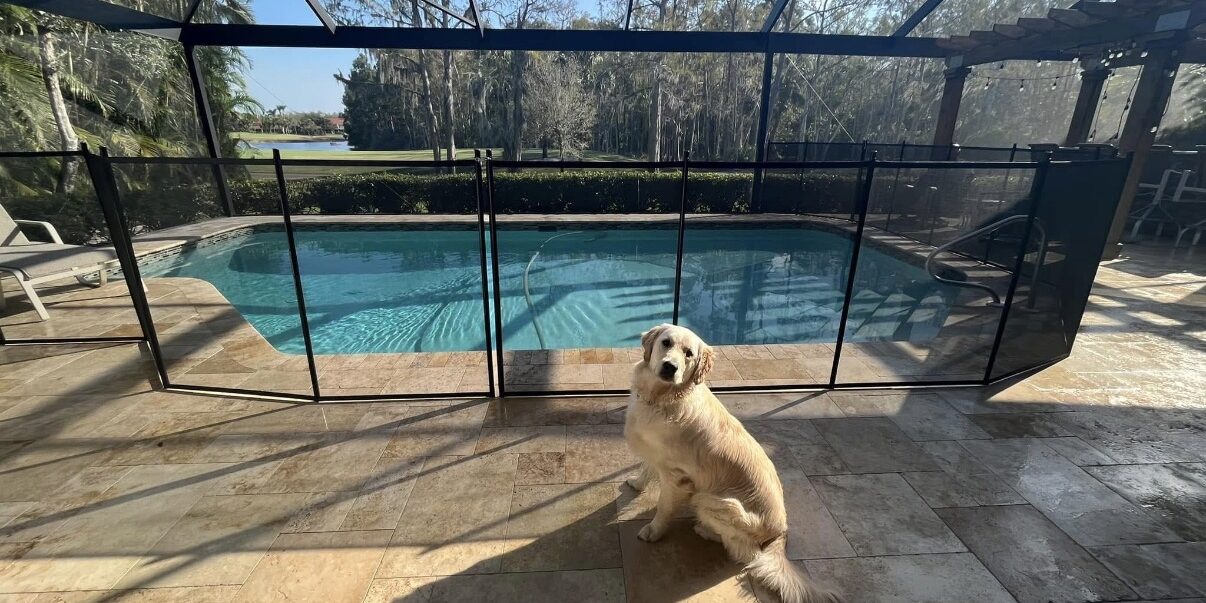
A reliable barrier is one of the best ways to control access when you cannot directly supervise your pets. I recommend a professionally installed mesh pool fence that creates a clear boundary around the water without making the backyard feel closed in. This type of pool fence provides a strong physical deterrent that prevents curious animals from wandering into the water.
Look for a barrier that is at least four feet high and fits tightly against the deck. The bottom should leave no easy space for a dog to crawl under. The mesh should be strong enough to resist pushing, climbing, and everyday outdoor use.
The gate deserves just as much attention as the fence. Choose a self-latching gate that closes by itself and locks every time. A gate that stays open for the family dog is not a safety barrier. Check it often, especially after heavy rain, landscaping work, or repairs.
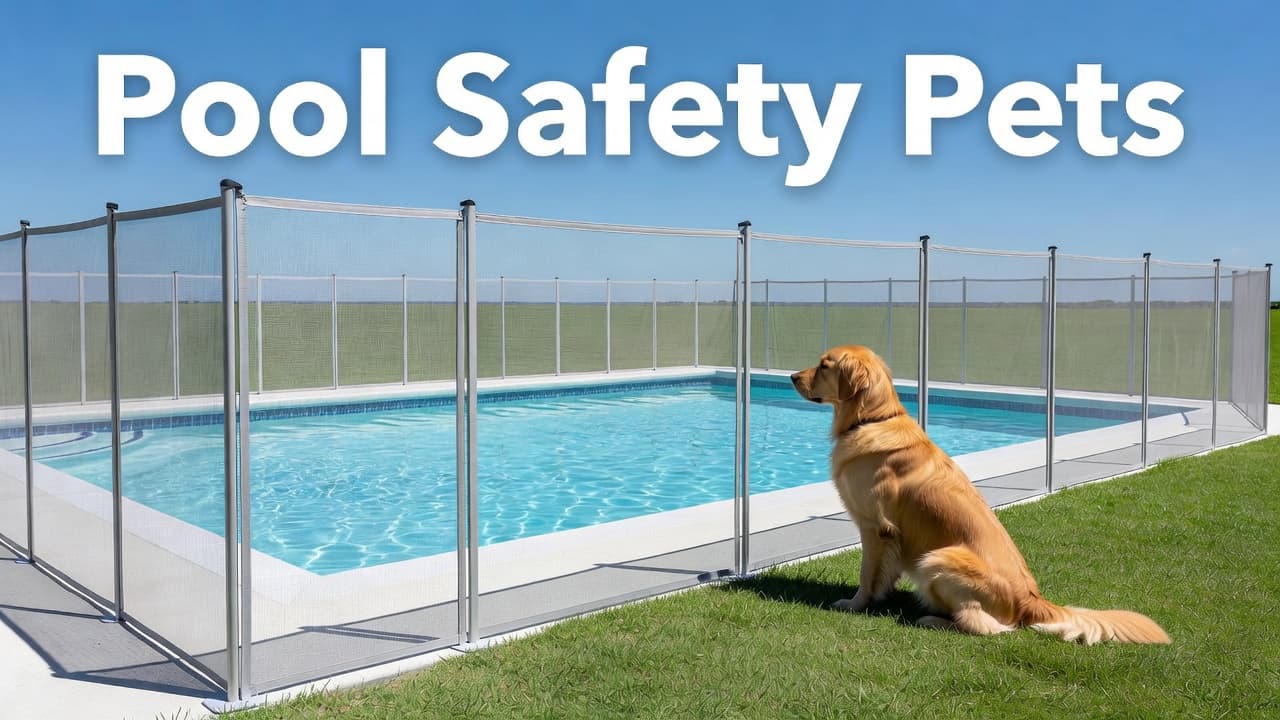
A removable mesh pool fence can be a practical choice for Southwest Florida homeowners. It can be customized around steps, raised walls, waterfalls, and different pool shapes. The clear design also gives parents a better view of children and pets.
I do not recommend relying on floating toys, furniture, or a loose temporary gate. Dogs can move chairs, squeeze through openings, or follow a toy straight into the water. A barrier should block access before your pet has a chance to make a bad decision.
A pool cover may add another layer when the pool is closed, but it must be made for safety and secured according to the manufacturer’s instructions. An unsupported or loose pool cover can create a different hazard if a pet walks onto it, so always ensure the cover is properly anchored. For added peace of mind, consider installing a pool alarm that detects water displacement, providing an alert if someone or something enters the pool unexpectedly.
PetMD also lists a pool fence among its pool safety tips for dogs. The fence helps when your attention moves to cooking, a phone call, a delivery, or a child who needs help.
Teach Pets the Exit Before They Swim
A pet should know how to navigate exit points before enjoying the pool. I like to show the way out several times, even if the dog has already swum in other pools.
Use the shallow steps, a sturdy pool ramp, or a pet ladder as the practice area. Walk your dog to it. Guide the front paws onto the first step, then help the back legs follow. Repeat the process calmly until your dog understands where solid ground begins.
If your pool has several exit points, teach the one your pet can reach most easily. A dog that falls in near the deep end may not have the energy to cross the whole pool. Bright markers near the steps can help people remember where to guide their pets, but do not depend on a visual cue alone.
Keep in mind that not all dogs are natural swimmers. If your pet seems hesitant or struggles with buoyancy, consider professional swimming lessons to build their confidence in the water. Never throw a nervous dog into the pool, as that can create fear and make future rescues harder. Start with calm introductions and shallow water, and always reward your dog for approaching the steps and leaving the pool.
A dog life jacket can add support during training, boating, or longer swim sessions. Choose a dog life jacket with a handle, a secure fit, and enough buoyancy for your pet’s size. Remember that this gear is not a replacement for supervision and it does not guarantee that a tired animal can find the pool ramp on their own.
The dog swimming pool safety guide from Chewy covers careful introductions, exit training, fences, and safety gear. I agree with the basic approach: teach the exit, stay close, and keep sessions short.
Cats usually do not need pool training because most prefer to avoid the water. Still, I keep screens, gates, and doors secure around the pool area. A cat that falls in may not find the steps without help.
Make Pool Time Easier on Paws and Skin
Florida heat drastically changes how your pool area feels throughout the day. A deck that feels fine in the morning can quickly reach temperatures that cause heat stroke for pets by midafternoon. Always check the surface with your hand before letting a pet cross it; if it is too hot for your palm, it is too hot for their paws. Since pets can sunburn, consider using pet-safe sunscreen for pets on exposed areas like ears and noses.
Shade makes a big difference. Set up a covered resting spot away from the pool edge, and keep a towel nearby for drying wet paws. Swimming during the morning or early evening also helps reduce heat stress.
Always keep fresh water available for your pets. Drinking pool water is dangerous, as pool chemicals can cause gastrointestinal distress, and swallowing too much water while playing can lead to water intoxication. Encourage your pet to drink fresh water from a bowl before and after swimming to keep them hydrated.
After pool time, be sure to rinse your dog with clean water. This helps remove residue from chlorine levels that might irritate the skin, as well as salt, dirt, and debris. Dry the ears carefully to prevent painful ear infections, especially for dogs with floppy ears. Inspect between the toes for small stones or sharp objects, and when you rinse your dog, take a moment to look over their skin for any signs of irritation.
The same routine helps after trips to the beach. Look over the paws for broken shells and cuts, and check the coat for debris like fishing lines or hooks. If you notice red, swollen skin, repeated shaking, vomiting, weakness, or trouble breathing, contact your veterinarian right away.
Finally, keep pool toys put away when nobody is swimming. A floating ball can attract a dog to the edge, even when the pool is closed. Store pool toys behind the safety fence or in a container with a secure lid to ensure your backyard remains a secure environment.
Use Active Supervision and Prepare for Emergencies
A fence gives you time, but active supervision gives you control. When pets are near the water, designate one adult to supervise the pool area. This person should not be cooking, scrolling on their phone, or assuming that someone else is watching.
Call this person the water watcher if that helps your household. The job is simple: supervise the pool area and stay close enough to act. Rotate the responsibility when needed, but communicate it clearly so everyone knows who is on duty.
Learn basic pet first aid and research pet CPR techniques, keeping your veterinarian’s number saved in your phone. Store the address of the nearest emergency animal hospital where every adult in your home can find it. Having a towel, leash, flashlight, and pet carrier nearby can also help during a stressful situation. Additionally, avoid heavy exercise or feeding right before swimming, as this can increase the risk of bloat in certain breeds.
If a pet falls in, stay calm. Use the nearest safe exit or reach tool to assist them. Do not jump into the pool if doing so puts you at risk. Once the pet is out, check their breathing and contact a veterinarian, even if the animal appears to recover quickly.
Inspect your pool fence and gate each week. Look for loose fasteners, damaged mesh, sagging sections, gaps, or a latch that does not catch correctly. Southwest Florida rain, wind, landscaping, and daily use can affect the integrity of any outdoor barrier.
If you would like help choosing the right setup, you can contact Pool Fence SWFL with questions about your pool area, gate, and installation. Homeowners can also Get a FREE Quote before making a final decision.
Frequently Asked Questions
Do pets need to wear life jackets in the pool?
While not required, a dog life jacket is an excellent safety tool, especially for puppies, older dogs, or breeds that are not natural swimmers. Always choose a vest with a sturdy handle so you can easily pull your pet to safety if they become tired or disoriented.
Can my cat safely swim in my backyard pool?
Most cats instinctively avoid water and are not strong swimmers, making a pool a significant hazard for them. It is important to keep your pool area fenced or secured to prevent a cat from accidentally falling in, as they may struggle to climb out on their own.
Is it safe for my dog to drink pool water?
No, you should never allow your pet to drink pool water, as the chemicals used for maintenance can cause serious gastrointestinal distress and irritation. Always keep a bowl of clean, fresh water in a shaded area nearby to ensure your pet stays hydrated without relying on the pool.
How often should I check my pool fence for safety?
You should inspect your pool fence and self-latching gate at least once a week to ensure there are no gaps, loose fasteners, or damage. Southwest Florida’s weather can wear down equipment, so regular maintenance is essential to ensure your barrier remains a reliable deterrent for your pets.
A Safer Pool Starts With Consistent Habits
Pets do not understand pool rules the way people do. They follow a sound, a smell, a moving bird, or a favorite toy. That is why I believe a strong barrier, a working gate, exit training, and active supervision belong together. Prioritizing pool safety pets requires a holistic approach that covers every angle of your backyard environment.
Keep fresh water and shade nearby at all times to prevent overheating. Check the tile, grout, and deck temperature to protect sensitive paws. Rinse your pet after swimming, watch for storm-related hazards, and inspect the fence often to ensure your barriers remain secure.
The goal is not to keep your dog or cat away from every enjoyable moment. It is to make the backyard safer when nobody expects trouble. A few dependable habits can give your family more comfort every time the pool is open.