After backyard water fun, drain the pool to wrap up summer fun safely. Yes, homeowners should empty a small portable pool as soon as supervised play ends.
That simple routine removes standing water and makes cleanup easier. Families don’t need a complicated plan, but they do need a consistent one.
The next step is knowing how to empty, rinse, and check the pool area.
Key Takeaways
- When play ends, adults should empty the pool completely.
- Fresh water and air-drying belong in every cleanup routine.
- Close supervision and secure barriers protect children around other backyard water.
Why an inflatable kiddie pool should be drained after use
Saving yesterday’s water may seem convenient. However, leaving a filled pool behind creates a hazard after everyone heads indoors.
Small pools still need serious attention
Young children can fall forward into shallow water and struggle to lift their faces. A small pool’s soft sides and cheerful design don’t reduce that danger.
Adults should finish draining before starting another chore or going inside. At gatherings, the caregiver supervising play should confirm who will handle cleanup.
That clear handoff prevents a familiar problem: everyone assumes somebody else emptied the pool. A nearby swimming pool also needs barriers and close supervision.
Clean-looking water doesn’t tell the whole story
Dirt, grass, and germs can enter during play. Clear-looking water doesn’t prove that a pool is clean.
Emptying the water gives adults a chance to inspect the bottom, seams, and corners. A sunshade canopy may improve comfort, but it doesn’t clean the water or prevent unsupervised access.
For larger inflatable pools with filtration systems, owners should follow the manufacturer’s water-care instructions. This after-use routine applies to small splash pools that families fill for short, supervised sessions.
How to drain and clean the pool
Start with the model’s draining instructions
First, children should leave the water and stay with a responsible adult during cleanup.
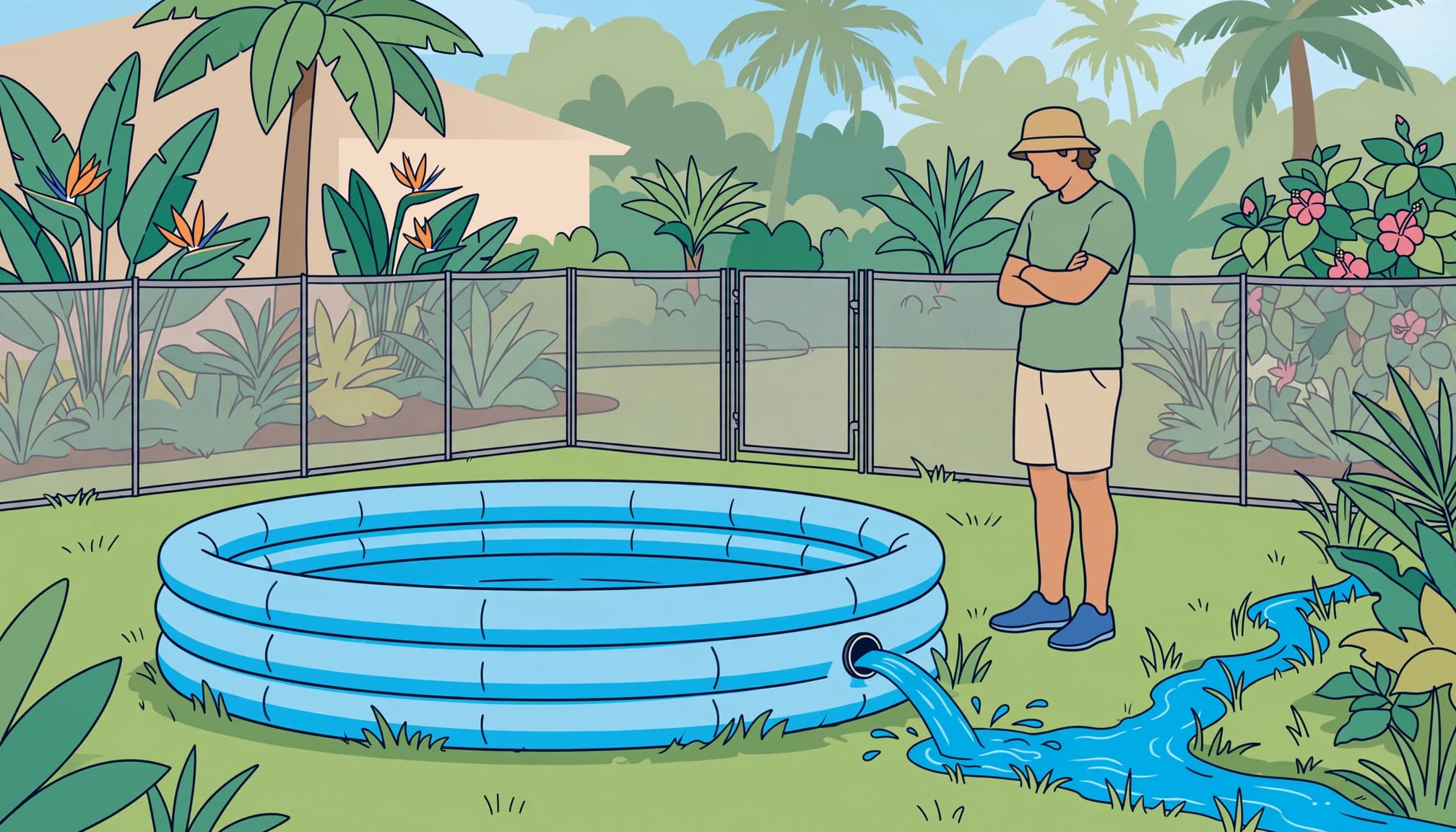
Check whether the model has a drain plug. If it does, an adult can open the drain plug according to the manufacturer’s instructions.
Consider the pool’s water capacity when choosing a water drainage route. Keep water away from walkways, neighboring property, and the home’s foundation.
Adults shouldn’t drag or lift a water-filled pool. Water adds weight and can strain the pool material.
Models without plugs need the emptying method described in their care instructions.
Rinse away debris and let everything air-dry
The CDC’s kiddie-pool cleanup guidance recommends removing debris, rinsing dirt away with fresh water, and letting the pool air-dry.
A garden hose can rinse away loose dirt. Use the garden hose to clear debris from folds and corners, then check seams for anything left behind.
Air-drying matters before the next use. For convenient storage during the off-season, follow the manufacturer’s directions for the particular model.
An empty pool can collect rainwater again, so draining doesn’t finish the backyard safety check.
Keep protection in place during water play
The cleanup routine works best alongside a clear water-safety plan for outdoor play. Every caregiver should know the same rules.
Give one adult the watching job
During play, one designated water watcher should focus only on the children. That adult should avoid phone use, cooking, and distracting conversations.
Infants and toddlers need an adult within arm’s reach. If the watcher changes, both adults should confirm the handoff.
Swim lessons build helpful skills, but they don’t remove the need for close supervision. A water slide and splash pad also need an attentive adult nearby.
Keep the larger pool separated
Emptying a kiddie pool doesn’t protect children from a nearby swimming pool. A family pool still needs its own barriers and secure access.
CPSC’s layers-of-protection guidance recommends safety features such as barriers around a swimming pool, including fences with self-closing, self-latching gates. A removable mesh fence adds physical separation while keeping the pool area visible.
Homeowners should keep gates closed and move climbable furniture away from the barrier.
Families considering professional pool safety fence installation can Get a FREE Quote by phone or email. That extra protection supports supervision. It doesn’t replace it.
Choose a pool that’s easier to maintain
A convenient choice is one that fits the family’s cleanup routine. Before buying, check product details for a drain plug, clear care instructions, durable PVC materials, and easy assembly. Quick setup can make use simpler, but verify whether a puncture-resistant base and sunshade canopy are included.
Check the listed water capacity and dimensions before choosing a family pool, kids pool, or toddler pool. More water capacity means more filling and draining, so a smaller model may be easier to manage. Compare the manufacturer’s age and fill guidance with the pool’s water capacity.
If a listing mentions separate air chambers or a repair patch, verify those features for that model. Check whether the air chambers inflate separately, since that can affect setup and repairs.
A foldable design supports convenient storage after drying, and some models can double as a ball pit if approved for dry use. An anti-skid bottom may improve footing, but adults still need to stay close. A splash pad may be simpler to clean, but easy cleanup deserves as much attention as fun extras!
Frequently Asked Questions
Can the water stay overnight?
Homeowners should empty small splash pools after use rather than leave accessible water overnight. A cover doesn’t replace that routine.
Does a mesh fence replace draining?
A fence adds protection around a swimming pool, but families should still drain portable splash pools after play. Gates can open during ordinary household activity.
Can children use the pool while it drains?
Children should leave before draining begins. An adult should supervise them while another adult handles cleanup when possible.
A reliable routine brings peace of mind
An inflatable kiddie pool should end the day empty, rinsed, and air-drying. Clean it right away to remove one standing-water hazard.
If your home has a swimming pool, keep barriers secure and supervision consistent. For help planning that protection, families can schedule a pool fence consultation.
Questions or ready to get started? Call us at (941) 500-9484