What Size Gap Is Safe for Kids? Well… It Depends
When it comes to pool safety, even the smallest gap can create a very big risk. Many homeowners assume that if the fence looks secure, it is secure—but pool safety codes and real-world testing tell a different story. Understanding how gaps work, why they matter, and how they’re measured is critical to keeping children safe around your pool.
At Pool Fence of Southwest Florida, we regularly meet families who believe their fence is safe, only for us to discover gaps large enough for a child to slip through—especially after turf or landscaping companies have made changes around the pool area.
Why Gap Size Matters More Than You Think
Florida code states that no gap larger than 4 inches is allowed anywhere along a pool safety barrier. But even that number doesn’t tell the whole story. The space isn’t judged only by measurement—it’s judged by risk.
Here’s what many homeowners don’t realize:
- A 5-inch gap—which doesn’t look huge—would absolutely fail inspection because a young child’s head could fit through.
- Inspectors use a weighted test ball to assess real-world danger.
If the ball can be pulled through the gap in any direction, the fence fails—because a child could follow the same path.
This means that space + flexibility of the material both matter. A flexible fence or loose tension can turn a small gap into a much larger hazard when pushed or pulled.
That’s why we don’t settle for the minimum. While Florida code allows a 4-inch gap, we aim for 2 inches or less to provide maximum safety.
How Turf Installation Can Create Unsafe Gaps
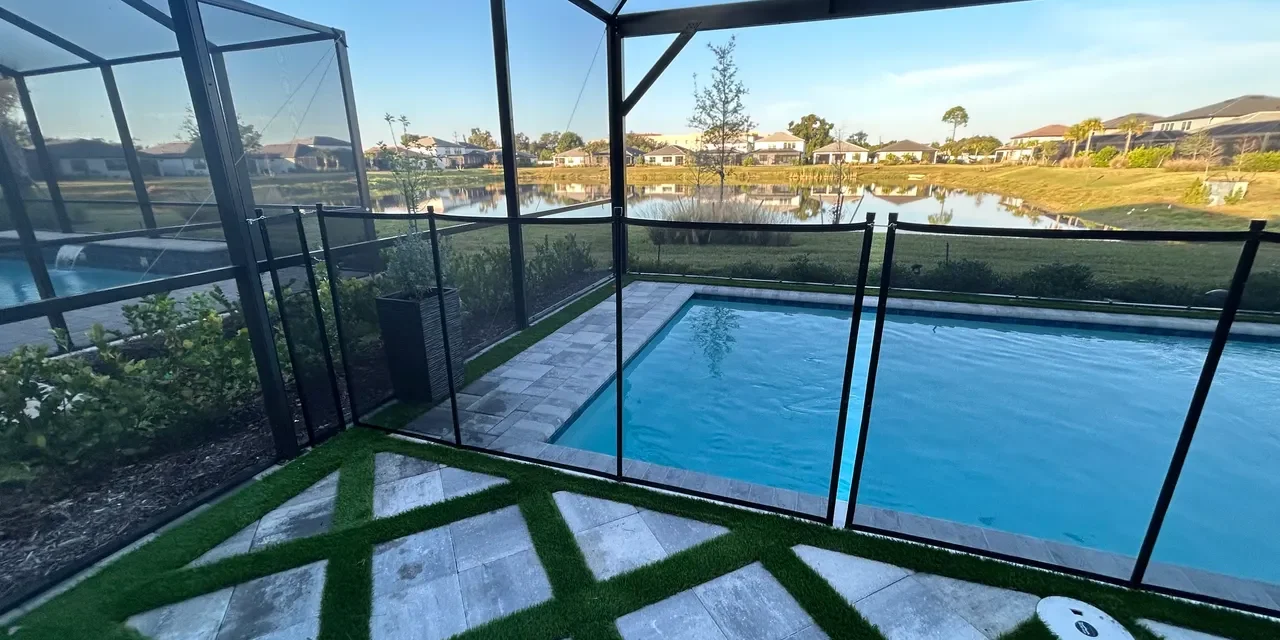
Artificial turf has become a popular backyard upgrade, but turf companies often unintentionally compromise pool safety barriers. We recently helped a family whose fence was:
- Tipping over due to improper drilling
- Left with huge gaps on each side after turf installation
- Missing necessary sleeves and supports
- Installed with incorrect hole sizes, preventing proper tension
Why does this happen?
Because turf installers typically don’t understand the requirements of a tension-based mesh pool fence system.
They usually:
- Don’t carry extra fence to fill newly created gaps
- Don’t drill the correct size or depth holes
- Don’t have the right sleeves—or multiple sleeve options—for a proper fit
- Don’t know that code requires 20 inches from the water’s edge
- Don’t know the 4-inch gap rule (or how to properly test for safety)
Unfortunately, these mistakes leave families with a fence that looks acceptable but is actually unsafe, and noncompliant.
How We Fix and Prevent Unsafe Gaps
As pool fence specialists, we know exactly how to secure gaps, reset tension, and add sleeves or posts to restore safety. Whether it’s adjusting the layout, installing termination posts, or correcting improperly drilled holes, we always find a way to make the fence safe and code-compliant.
Because when it comes to children, every inch matters.
Have You Recently Installed Turf? Get Your Fence Checked.
Even small changes in elevation or drilling can create dangerous openings. If you’ve had turf or landscaping work done near your pool, let us inspect your fence for safety.
📞 Call or email Jessica today for a free safety inspection and quote.
Your pool fence should protect your family, not leave room for risk.